Showing posts with label Kaitlin Bryson. Show all posts

November 27, 2016

Above and Below

By Kaitlin Bryson
White Sands National Monument, NM
October 26, 2016

I am obsessed with microbial and mycorrhizal networks who live underground and weave together diverse root systems transporting nutrients, water, and food throughout species.  These creatures are especially important in places like White Sands, where the land is exceptionally difficult for plants to habituate.   These outstanding communities of strange and fascinating organisms are major players on our planet – and are some of the most vital to our terrestrial existence.  

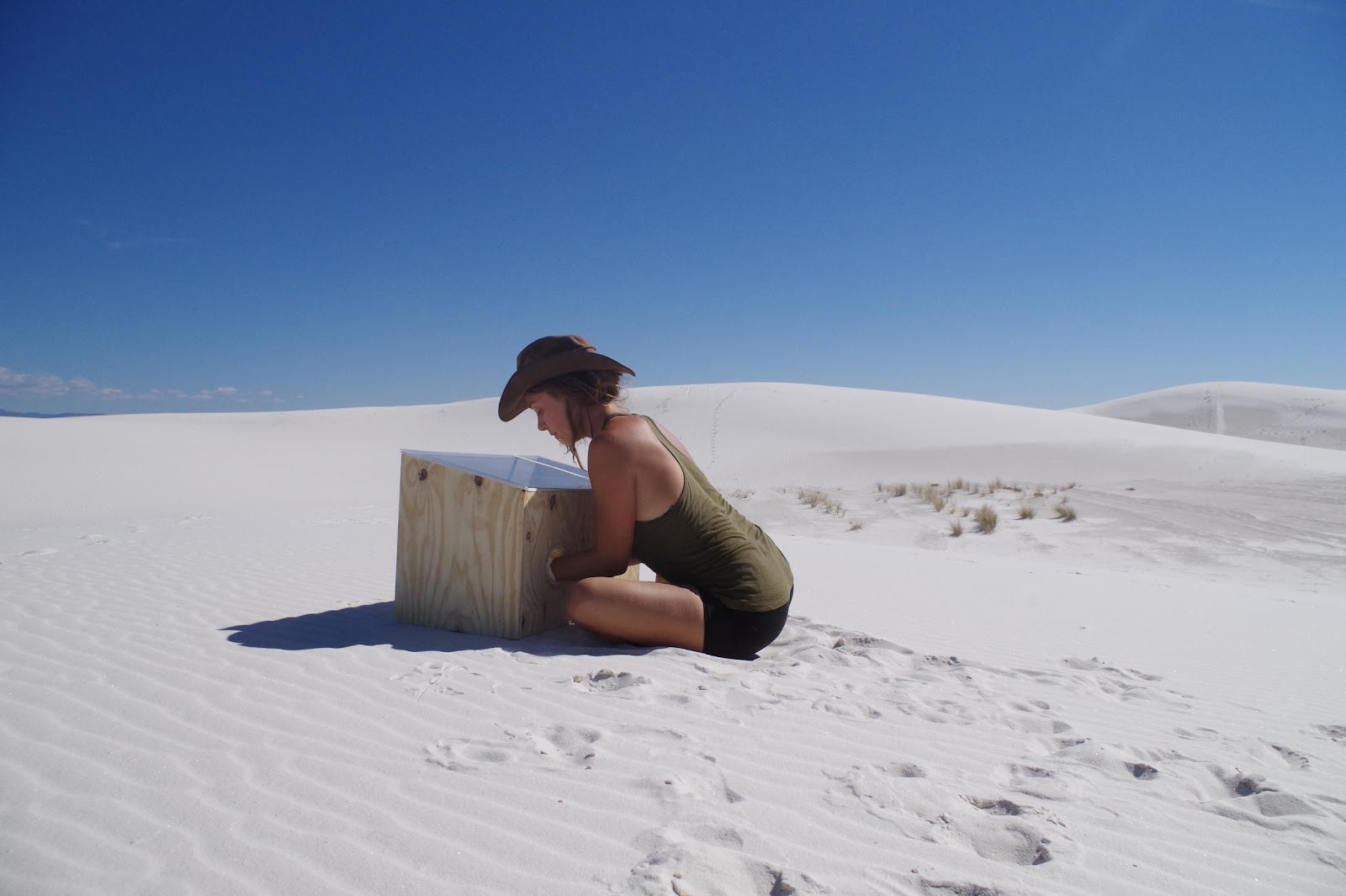
My obsession has turned into a sincere desire to express and showcase (who I consider to be) the Earth’s MVP(s) within my work.  I have been playing around with different methods for drawing these connections, but feel like the projects and ideas are still in early phases.  Pictured below is my experiment at White Sands.  I made a weaving between two yucca shoots and then took leaf samples from each. Then, using a glove box that I constructed (to create a sterile environment) I took the leaf samples and cultured them in petri jars.  The hope is that the plant tissue will grow and express the mycelial network that runs throughout the vegetative body and throughout the soil.  Stay tuned.  
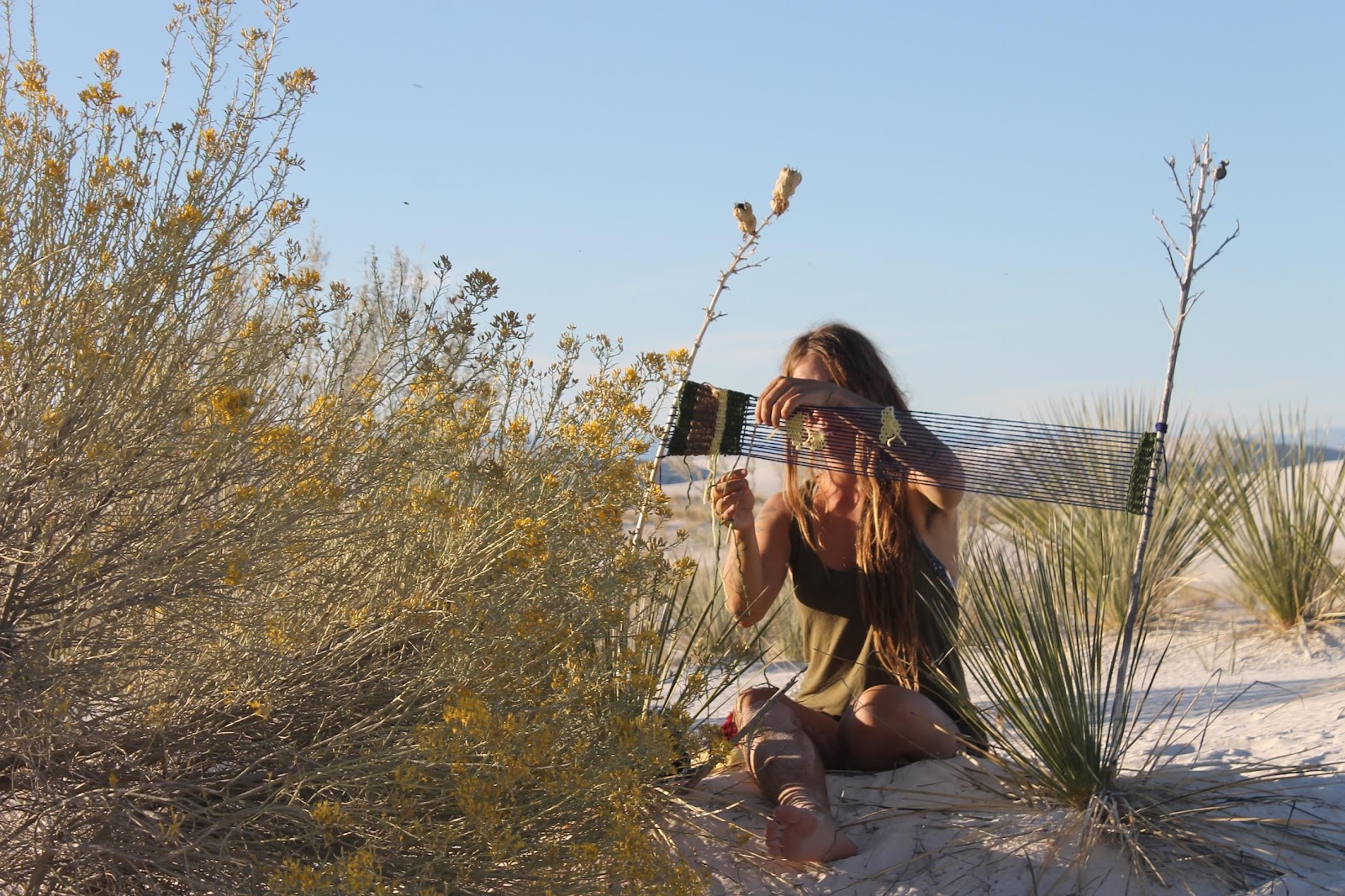

../Desktop/20161026_whitesands_solo_keb_ned_0014.JPG../Desktop/20161026_whitesands_solo_keb_keb_0097.JPG

November 18, 2016

Lifelines

By Kaitlin Bryson
Big Bend State Park, TX
October 24, 2016

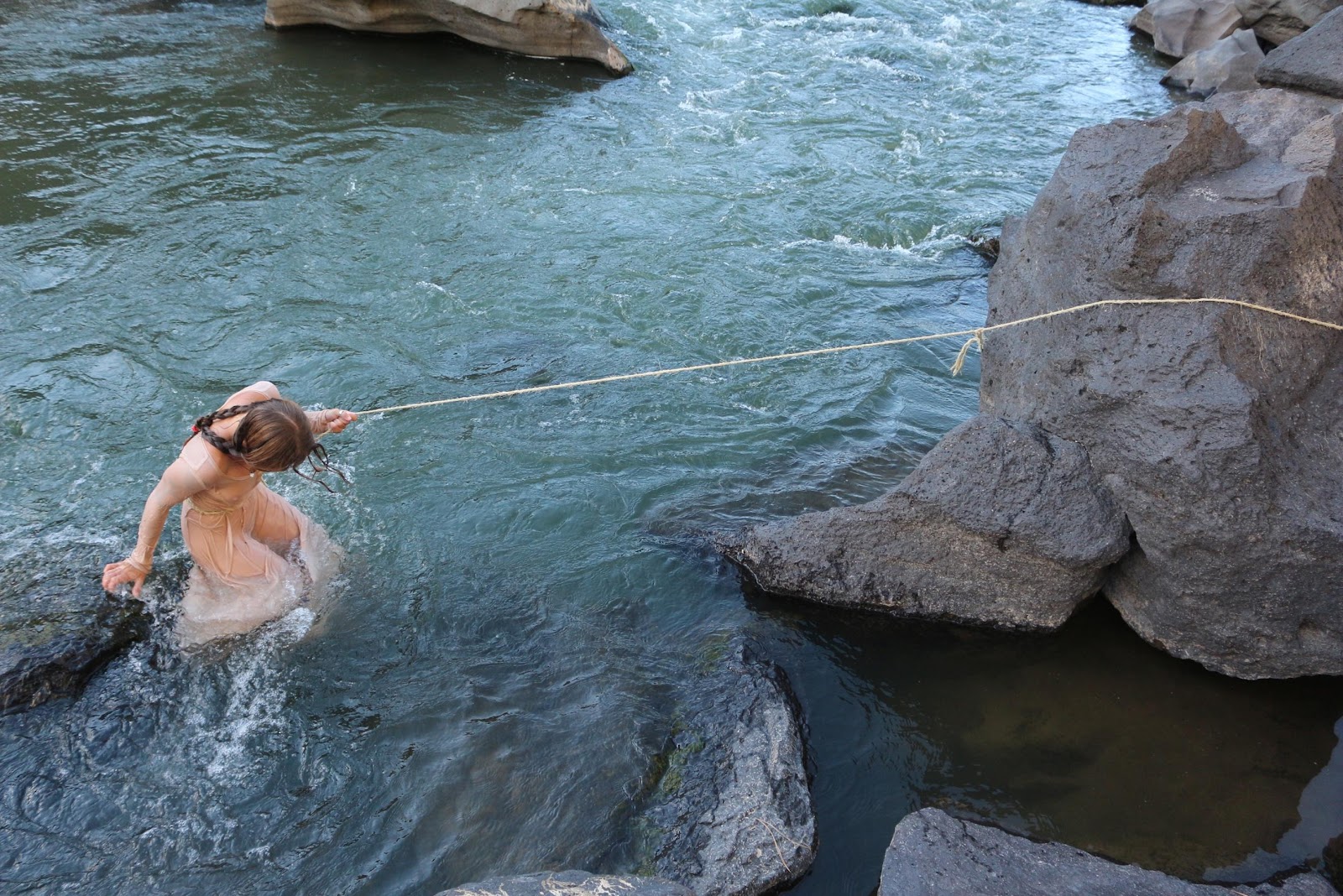
Today I sat on the banks of the Rio Grande and offered my hand to the Rio.  With needles collected from a nearby Prickly Pear Cactus, I tattooed the line of the river into and around the side of my hand. This gesture is a form of acknowledgement; the Rio is now embedded into my lifelines, just as I am woven into its systems.  
As we traveled down the Rio Grande this semester learning and thinking about water rights, it has become incredibly clear that the Rio is a living being and is the tie that binds it all together.  It is a visceral link, a blood line that runs through the land, which supports and nourishes every aspect of life in the Southwest.  It connects all of the varying strata – the lives of humans and nonhumans, culture, spirituality, history, and ecology – into a dynamic and ever-changing system.
I see the completed line on my hand only as the beginning of this piece.  It is a mark that will most certainly change, just as the Rio itself does.  I will document and record the shifts, erosion, and changes that this line undergoes as I continue to work for//with//within this watershed and bioregion.  
../Desktop/20161024_bigbend_solo_keb_keb_0012%20(2).jpg
../Desktop/20161024_bigbend_solo_keb_keb_0001%20(1).JPG


November 16, 2016

I Wonder

By Kaitlin Bryson
Marfa, TX
October 18, 2016


I wonder if we were to evolve past the current state of collectively inflated egos, would “politics” be a genre of stand-up comedy?  Would it then be possible to sincerely laugh at this silly performance that we as a people enact?  What would things look like if money didn’t rule the opinions of individuals, and individuals didn’t rule the lives of millions?  What if, instead, we asked the opinions of the Rattlesnakes, or of the microbial communities, or the Ocotillo, or the Javelina?  I bet the old Sycamores and the ancient Bristlecone Pines would have some great suggestions.  What if we actually sat quietly and listened to the desert? What if the voices of the marginalized were listened to?  And, what if a pipeline wasn’t allowed to destroy cultures or communities (above and below ground)?  What if water was seen as a living being?  Would we still shit in it?  What if the environmental agenda wasn’t a political agenda, or wasn’t part of an agenda at all?  What if it was agreed that if we destroy the land, we destroy ourselves?  What if it was obvious to everyone that we (humans) are not in control, and that we (humans) are just another organ in a body?  

November 10, 2016

Belonging

By Kaitlin Bryson
Turkey Creek, Gila, NM
October 16, 2016

I do not belong to another –
to an entity, to a body, to a culture,
or to a country.  
inner is outer
within and without.  

I see things most clearly when looking at the ground
not with my head down, with my head level – and
when I observe roots growing into stone.  
I see things most clearly when I trace lines in the forest,
when I am deafened by the desert,
or while walking through a living stream.
I see things most clearly when a cactus makes me bleed.  

I do not belong to another
I don’t even know what belonging means.  


November 4, 2016

For Protection

By Kaitlin Bryson
Valle Vidal
October 2, 2016


../Desktop/20161001_vvidal_solo_keb_keb_0010%20(1).JPGUsually I find burned forests to be a special kind of graveyard.  A point of interest, and the place where I first typically wander off to (if it’s available).  I like these places because I can usually see exciting moments of re-composition happening.  Bursts of new life transforming what has been lost to something that will recoup.  It is a place of great metaphor, as well as an embodiment of nutrient exchange – of life’s vitality, many examples of things I genuinely revere.  


However, in this burned Ponderosa forest, I see a different world.  It is one of real death, but without the beauty of rebirth happening close behind.  There are subtle moments but most profoundly, there is mass starving and dehydration.  The old Ponderosa trees are petrified nearly to dust, and there are baby saplings barely holding on.  Plants that are usually so tolerant and forgiving of adverse conditions and soil, like mullein and sage, are scarce – or only stretch up from the ground a couple of inches.  


I was shocked to find out the fire that passed through happened 12 years ago.  With that amount of time I would expect a substantially more vivid recovery.  Speaking with Jessie, a native to Valle Vidal, I learned the slow recovery is largely due to the Elk grazing on the saplings, who are desperately fighting to take hold and reconstruct the forest.  The Elk have plenty of grasslands to graze on, but overpopulation (due to the removal of their predators) causes them to graze in new and unusual areas.  If these saplings were able to grow it would cause a ripple effect for the entire forest ecology.  Moisture would be held in the ground, fungi would repopulate the soil community and nutrients and water would be distributed throughout.  Erosion and sun scald would be scarce – instead of the plant life, and a diverse range of wildlife would return, creating a more balanced system.  Learning about this situation made the human/ecological interconnection more evident to me than ever before.  


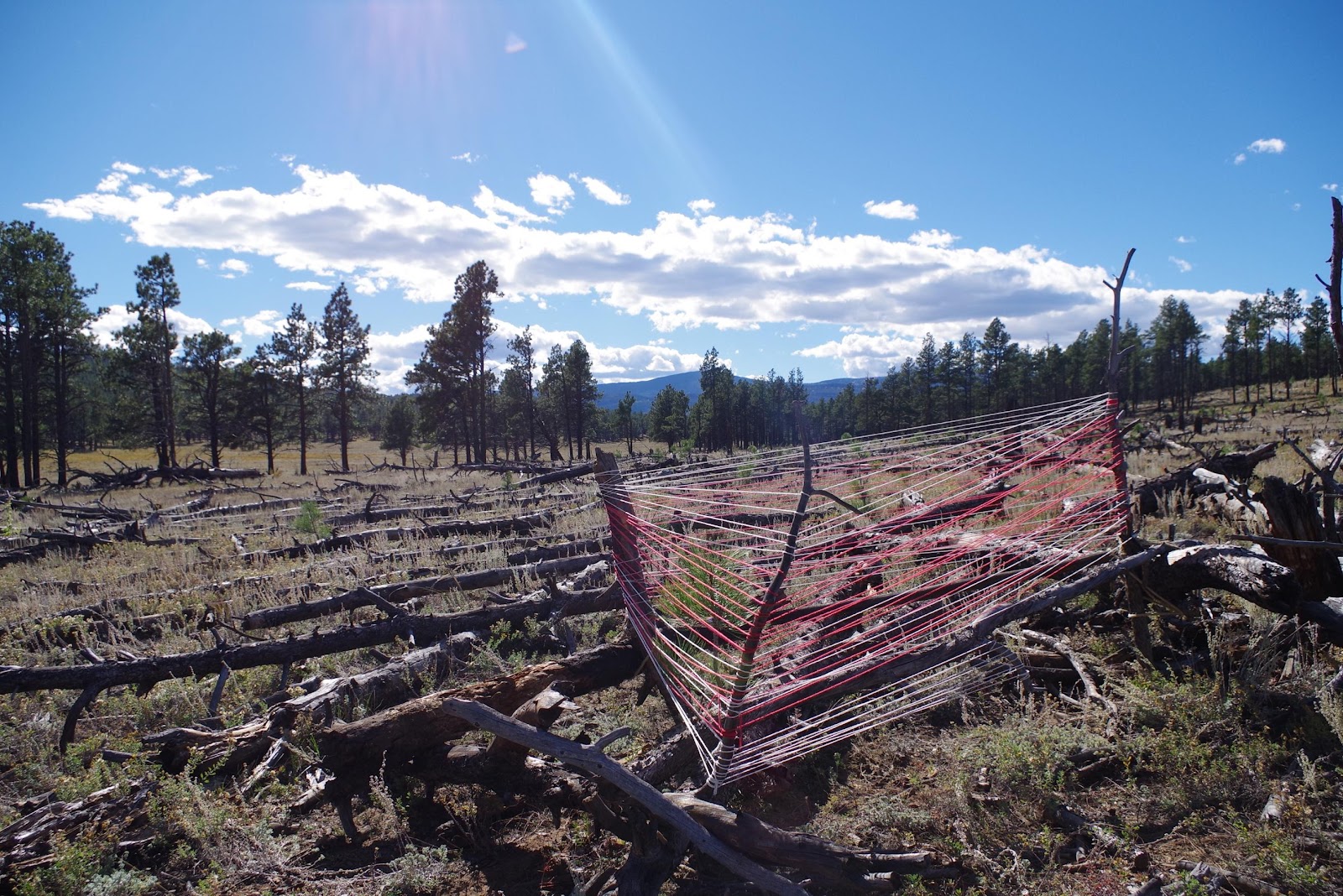
After spending many days wandering through this forest I decided I wanted to make a fence around a baby sapling in hopes of protecting it and allowing it to grow past the Elk’s reach.  The attempt was futile, due to my lack of proper materials, and the fact that there were many saplings who needed a nursery – not just one.  But, the action did make me think about the importance of protection, and the metaphorical act of establishing a personal boundary around yourself for that protection in order to foster and nurse some kind of growth.   Even if that line might be illusionary or just a constructed ‘idea’ of safety, it is still necessary and vital for personal development.


October 26, 2016

Confluence

By Kaitlin Bryson
Wild Rivers, NM
September 29, 2016


For the matter of letting go, for grieving, for pain:


You must remember that you already know how, that you practice it every day.  In every dying cell of your body, pulling the hair off your brush, and
with every wax and wane of the moon.
It’s good to remember
That you’re actually quite good at it.
That you must know it well at this point in your life, especially after
The stories have been told so many times by
So many different people.  
It comes in and out, and you
Know this.  You
Breathe this.  


But, letting go means letting off, and that’s not the solution – that is the
Departure.  The flight pattern is so practiced you don’t even realize you’re out of your body and when you get gone,
it is hard to come back.


Facing pain means listening to it, and letting its voice be heard.  In a dream you hear it speak -   and it tells you to look to the confluence.  
The slow dissolution of the boundaries between worlds is
(perhaps)
where acceptance can be found.  
That border exists, sometimes indefinitely, but
there is always a subtle mixing which turns the reflective arrow outward.


How long does it take for two bodies (made of water) to merge?

20160926_wildrivers_solo_keb_RLG_0016.JPG


October 23, 2016

Rabbit Brush (Chamisa) Dye Bath

By Molly Zimmer, Kaitlin Bryson, Hollis Moore
Wild Rivers, NM

September 26, 2016

  1. Rusty Can Mordant with Tannic Acid from Chestnut Bark
    • Fill pot with 1 tbsp of vinegar for every cup of water
      1. Our pot holds 20 Cups of Water, and we used all the vinegar we had (approximately 13 tablespoons)
    • Add rusty objects and bring to boil
    • Boil for 60 to 90 minutes (over wood fire or propane stove)
    • Add fibers to mordant and boil for 60 minutes
    • Cool, Rinse and let Dry

Start: 11:00am
Stop: 1:00pm
Total: 2 hrs (1hr with mordant, and 1hr with fibers added)

Fibers Before Beginning Mordant and Dying Process (mix of animal and plant fibers)

Collected rusty can mordant at Wild Rivers: 2 pieces of rusty wire, one bottle cap, one rusty nail, one rusted metal strap, 2 newly opened aluminum cans

Added 3 Tbsp of Tannic Acid to Mordant Bath, Let Fibers sit for 5hrs in Solution

Resulting Dyed Fibers with Tannic and Rusty Can Mordant

      2.   Rabbit Brush (Chamisa) Dye Bath
  • Heat Rabbit Brush for 1hr in pot
  • Let sit overnight or all day
  • Re-heat dye solution with blossoms to extract all dye for 1hr
  • Strain out blossoms
  • Add dye fabric
  • Re-heat and boil with fibers for 1hr
  • Let sit for 24hrs in solution with fibers
  • Rinse and Dry

New Fibers (unmordanted) for Dye Bath

Collected Rabbit Brush from along the Roadside, and stripped off all the blossoms.

Rabbit Brush in Fire Golden Dye Solution
Fibers Boiling in Dye Solution

Resulting Rabbit Brush Dyed Materials


October 9, 2016

Good Work

By Kaitlin Bryson
Hogbacks, NM
September 21, 2016


Feeling clunky, unsure of myself
Out of my body – sick, tired, ignorant,
Rolling in and out of bad dreams
Anxiety dreams that leave me waking
Restless and
Backwards.
My heart aches because of the destruction, the injustice, and the hardships
That I only can be an outsider to.  
I feel like I’ve been punched over and over again, and the worst part is that I have the option to walk away.
I am an other.   

So, I’m trying to regroup in order to stay with the group.
To progress, to digest, to support, do good work.  
What is good work?

Good work is thanking the ashes before making the next fire.  
Good work is having respect for all beings.  ALL beings.
Good work is recognizing the light and shadows exist because of one another.
Good work is composting crisis and using its decomposition as nutrients.
Good work is greeting the sun each morning with your best intentions, and saying goodnight with your honesty.  
Good work is continuing to show up,
Continuing to love.    

Good work is forgiving yourself.  


September 30, 2016

Dam

By Kaitlin Bryson
Glen Canyon Dam
September 11, 2016

What a strange place to find ourselves in. A major contrast to the places we have been and the life we have seen so far on this trip. Today I find myself agitated and unsettled, judgemental of human nature and self-conscious of my participation in it all. After we toured the Dam (and flooded the van with a river of bad ‘dam’ jokes), we had an incredible and impromptu seminar on the front lawn outside of the dam tourist trap. The biggest take-away from the discussion for me was that this contrasting experience has an equally important place at the table, and ignoring or getting agitated by it only creates another “other” and pushes the conversation out of reach.  As an artist, it is imperative to be able to look critically at the constructed systems that are woven so tightly into our collective psychological framework. This includes racism, classism, sexism, and the allowance of environmental destruction that we are all taught to think is normal or is merely “history.” The loss of the Glen Canyon’s complex ecosystem—as well as a people’s land and culture—for the “betterment” of human development is an outdated, overrated, and an incorrect way of thinking. How does this end?

September 26, 2016

For the Creatures of the Desert

By Kaitlin Bryson
Muley Point
September 8, 2016


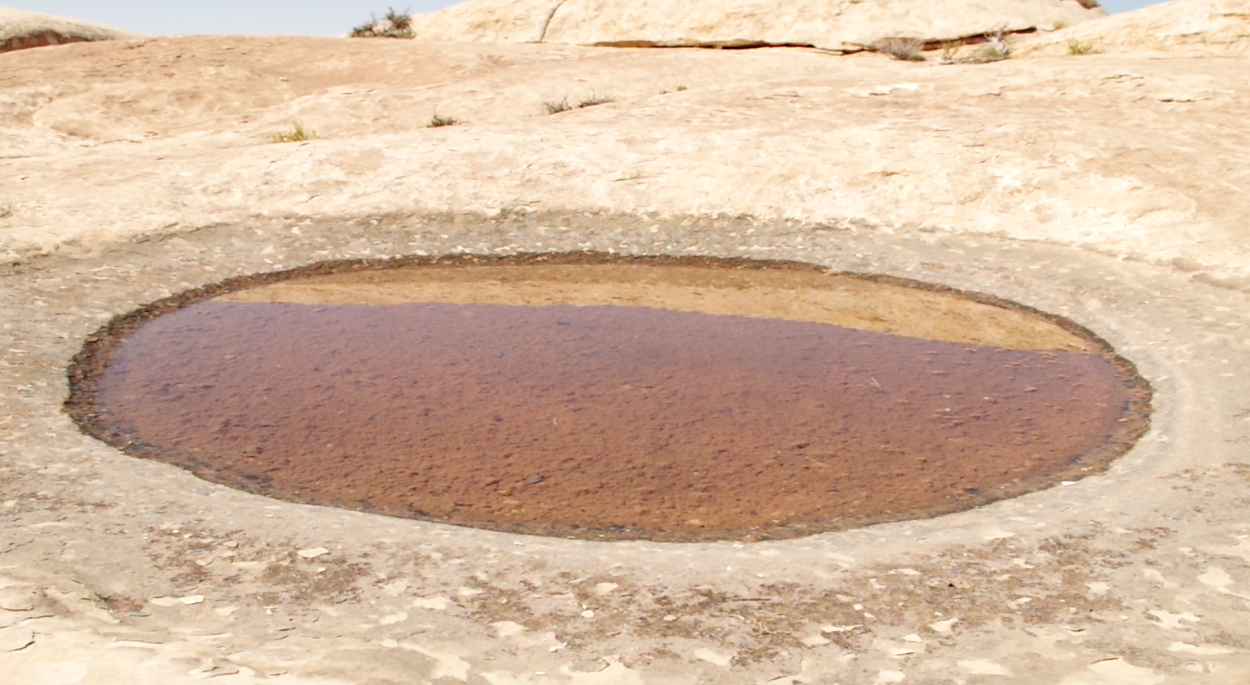
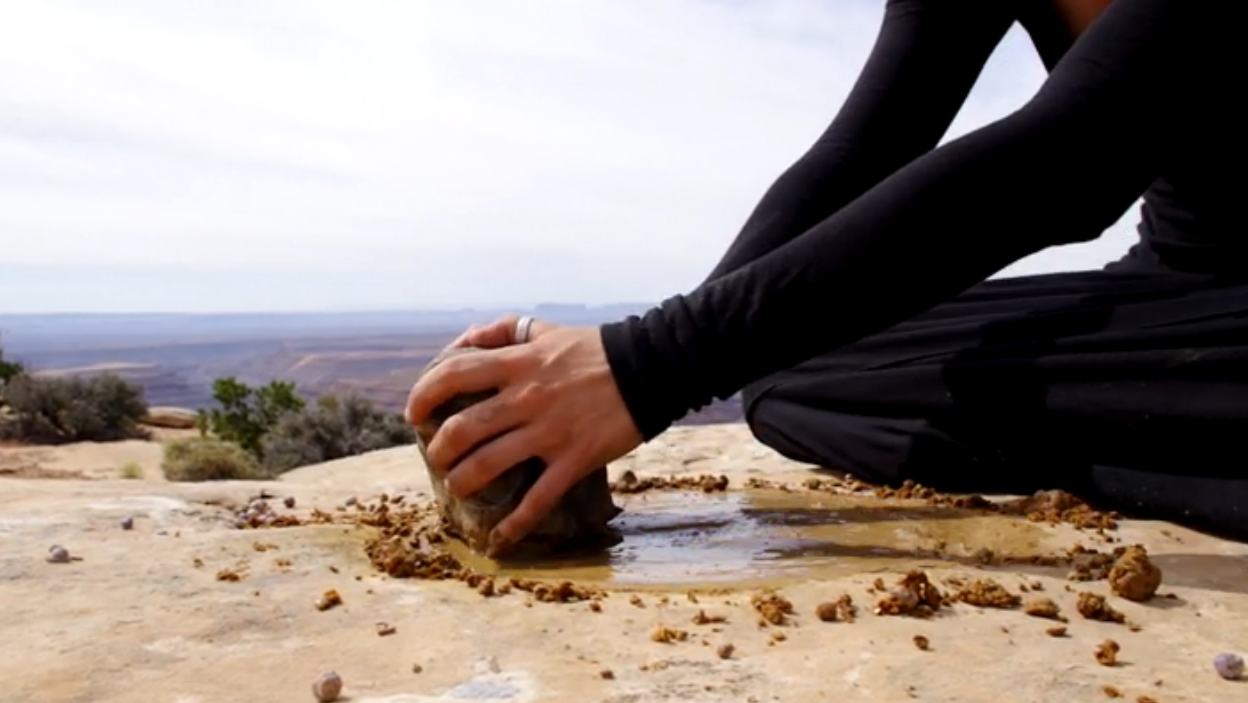
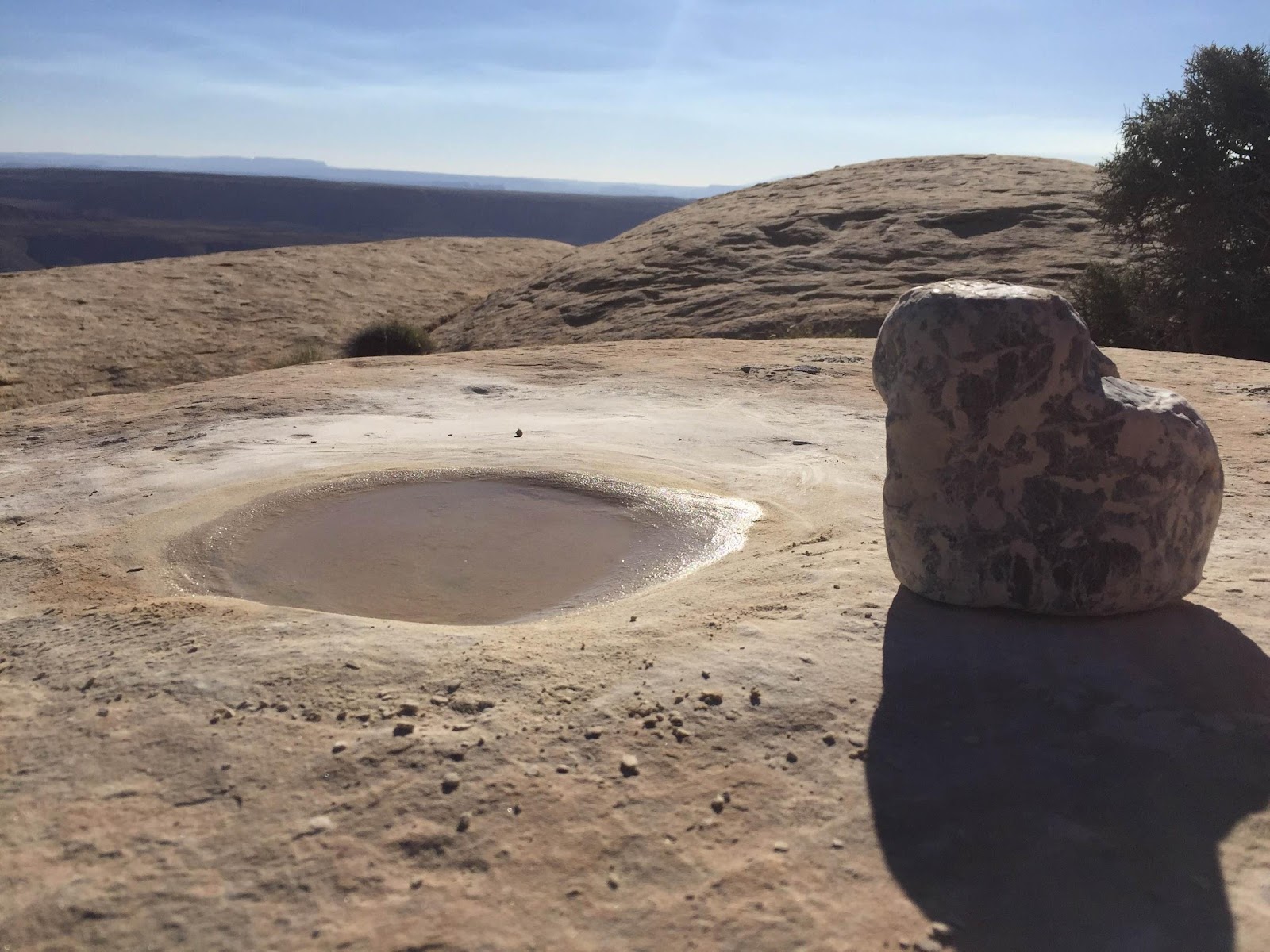
It was a sweet relief to find myself in the aridity of this Mesa. I have a profound reverence for the old Pinyons and Junipers that populate the complex and complicated soil structure, which the lichens, microorganisms, and sparse rainfalls are slowly constructing. I wandered through the ancient landscape and found the indentations of numerous tinajas (basins) pocketing the sandstone boulders. These pools blossom after a rainfall and provide the desert’s creatures (plants, animals, soilweb, fungi, etc.) with life-giving waters. The observation of this made me reflect on a previous experiment in which I was dragging a large stone behind me in a giant circle as a meditation and dedication to the process of grieving. This action was physically difficult and put me in a trance-like state. Unfortunately, it was also a form a destruction to the ground below. This left me deeply troubled. Once I saw the tinajas, I decided that I wanted to grind the stone down and create a basin with my own hands. It would be an ode to grief, but also make a mark with the potential to hold or foster life, instead of destroy it.
an existing tinaja


I grinded on the sandstone slab for 20 hours over the course of three days. The action was laborious beneath the pounding heat and against the wind, my body folded over in constant effort. And yet, I managed to make a small impression in the sandstone that will hold water and ultimately give life to the creatures of this land. I know that through time and with more rainfall, water will pool in this space and the lichens and innumerable microorganisms will enter and begin to work to make the tinaja wider and deeper, enriching its effect.  

the first hour of work


The work quickly became a constant meditation in which I was able to sift through my grief and also get outside of my normal thinking patterns and instead focus on the abundant life that resiliently resided around me. There are many trees and brush growing directly out of the rocks, windblow on the edge of the cliff. They are dwarfed, maybe growing just a few inches per year.  And yet, they are able to live in this incredibly difficult environment thanks to the community they share with one another, with their ecosystem, as with the ground—the Earth—itself. The plant roots are connected through a symbiotic mycorrhizal network that permeates the soil and sandstone. Because of this partnership the plants are able to get the nutrients that they need from the deeper soils that are composed of more organic matter further north. One thought that came through strongly for me was that this nourishment and support is much like my own grieving and, in a larger sense, like the act of existing. All beings independently occupy their own small corner of space, but all need one another (humans and nonhumans alike) for nutrients, for life, for support.  

the finished tinaja


September 24, 2016

Notes on Being

By Kaitlin Bryson
Headwaters  
September 2, 2016

Exploring unfamiliar lands leads to generating and (potentially) understanding ideas outside of yourself—outside of your prescripted methodologies and modus operandi. Inside out, outside in.  You see that being means being related.  

True observation comes from a quiet place. In this place you can listen to the light change.  

When walking through the forest, look for decay and debris first. The fallen matter is where you will find the freshest life.  

Hiking with 4 other artists makes for a slow hike. There is simply too much to look at and each person notices different things: patterns, colors, plants, mushrooms, graffiti, matter out of place, a cliff far off in the distance. We ask questions and answer one another. I find it to be the sweetest thing.  

The ground is a sacred place. I don’t care what anyone says, I will loudly worship it and praise the life it holds, forever.  

September 22, 2016

Collaborative Natural Dye Experiments


Molly Zimmer, Hollis Moore, Kaitlin Bryson
Headwaters
September 4, 2016


Dye Bath Experimentation with Naturally Collected Materials:
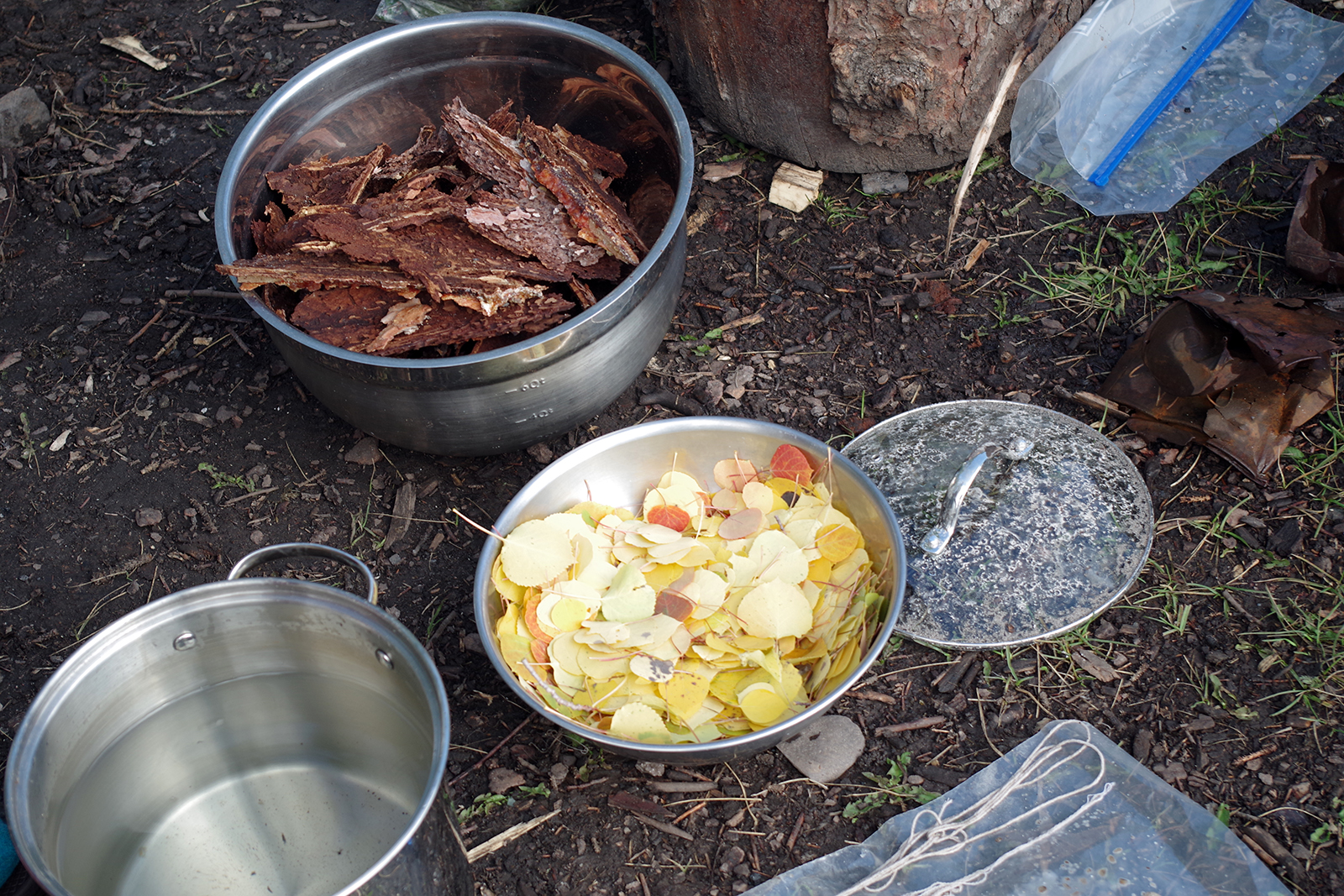
  1. Yellow Aspen Leaves
  2. Damaged Douglas Fir Bark from Bark Beetles
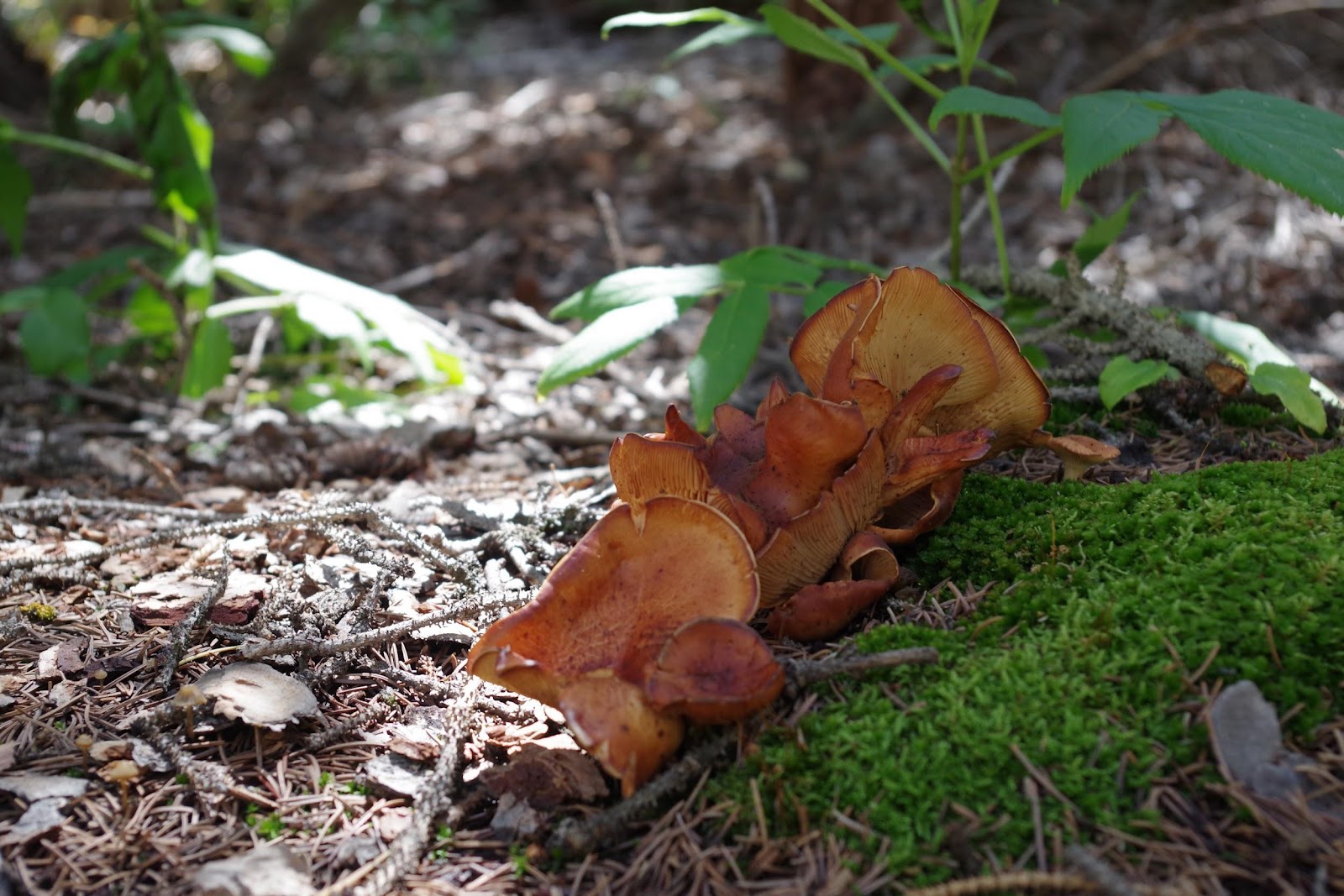
  3. Lichens from nearby Rocks and Ground


Mordants:
  1. Found rusty tin cans
  2. Wood ash from the fire
  3. Soda ash
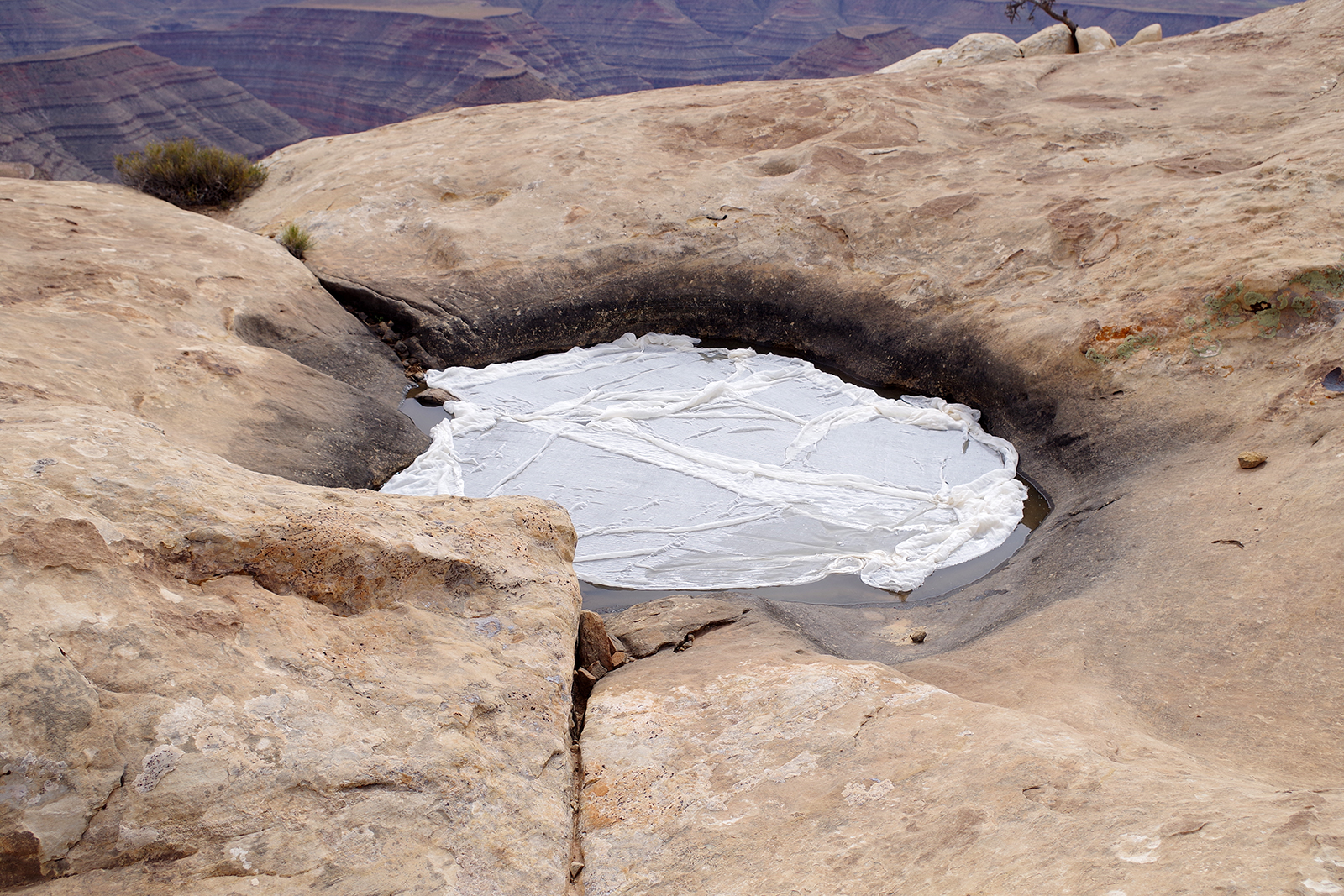
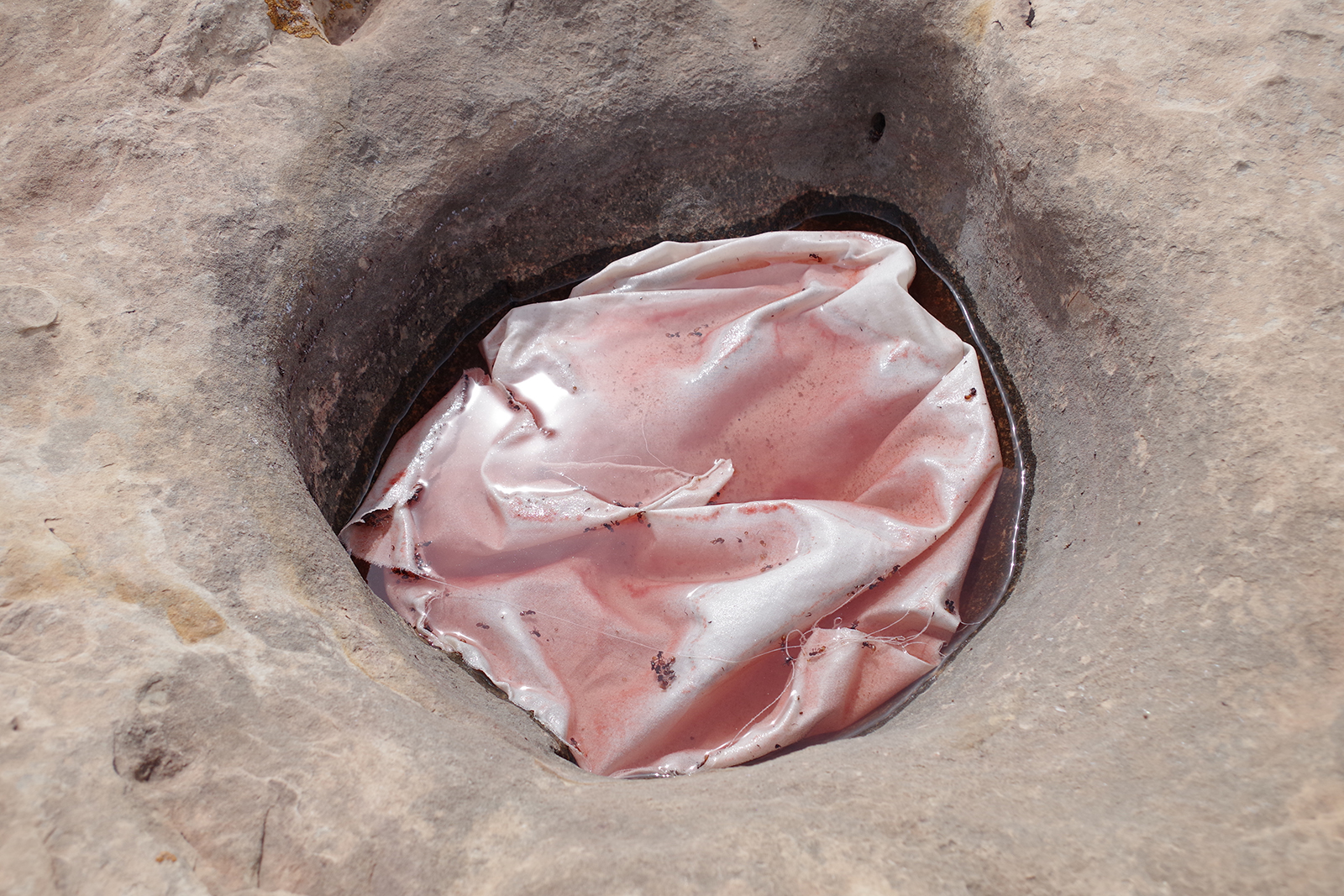
  4. Tinajas and existing minerals


Materials:
  1. Alpaca lace wool
  2. Cheese cloth
  3. Linen
  4. (paper ?)
  5. Cotton thread


Thoughts on dye bath experiments:

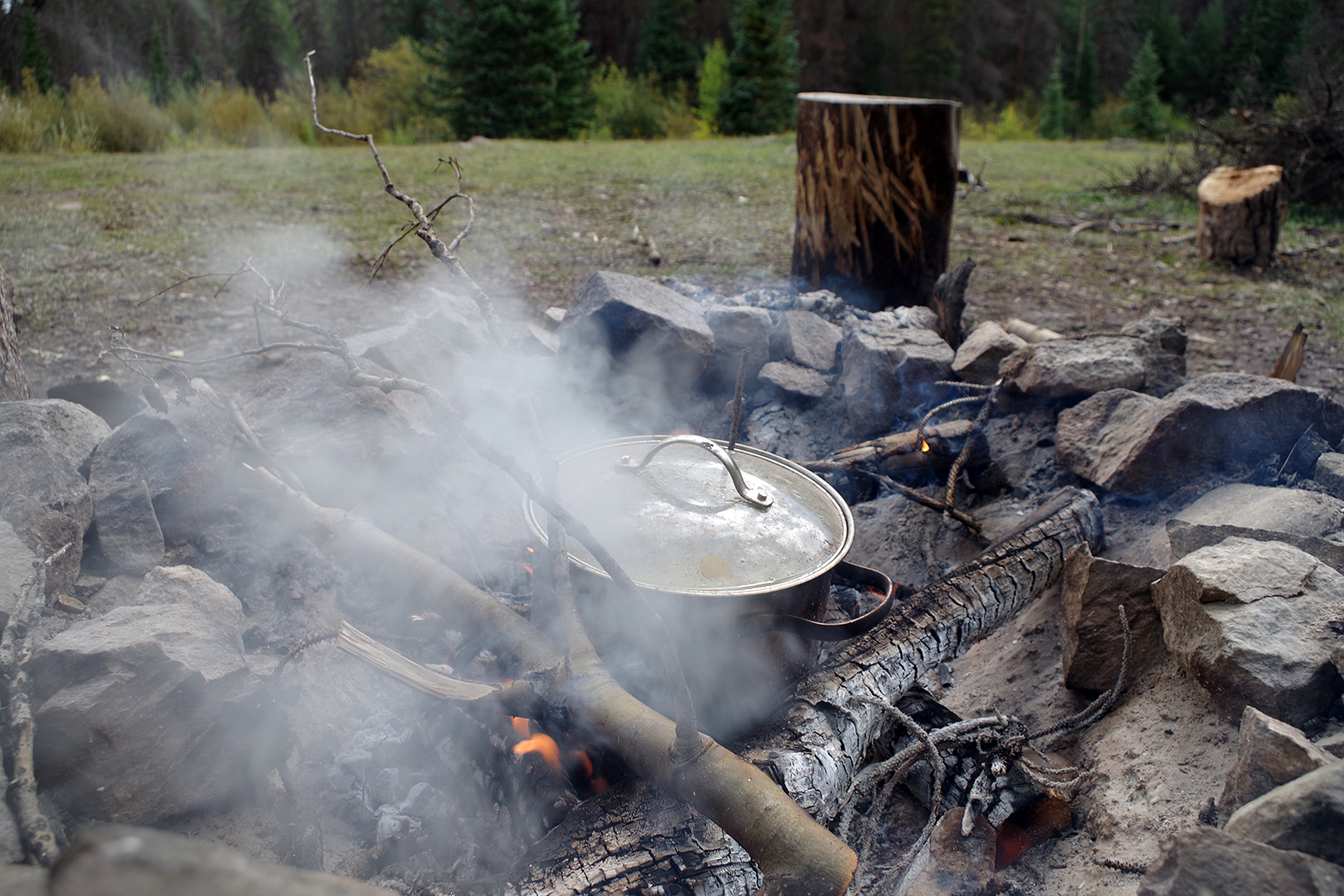
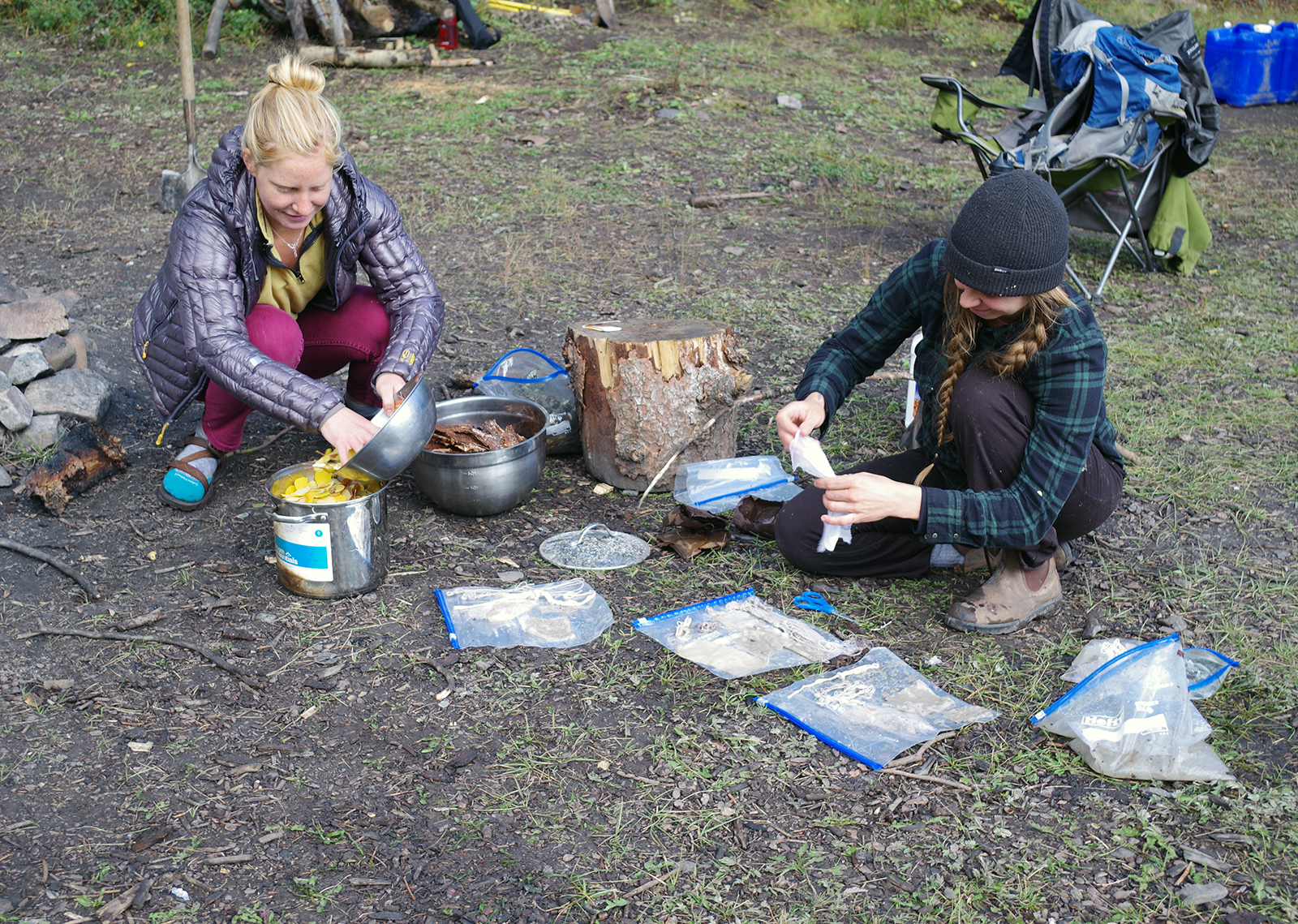
It is a special experience to walk through a landscape collecting (and knowing) plants who produce a spectrum of colors.  Natural dying feels a bit like chemistry and alchemy, though it is grounded in a very intuitive-based thinking.  Each one of us are fascinated with color and with expressions of the land -- using the color from the environments we travel through speaks softly but directly to that place.  We are excited about exploring the possibilities that the plants hold, along with learning more about the traditions of natural dying, and even more excited about the blossoming collaboration between the three of us.  Stay tuned.  

Collected Bowls of Natural Dye Materials


Aspen Leaf Dye Cooking in Fire


Hollis Moore and Kaitlin Bryson Working with Dyes

Natural Tinaja for Mordanting Fabric


Small Tinaja for Mordanting