Showing posts with label Nancy Dewhurst. Show all posts

December 1, 2016

Time is Money

By Nancy Dewhurst
White Sands National Monument, NM
October 25, 2016

“What’s the difference between time wasted and time well spent?”

Kaitlin’s parting question to me as we swapped shifts for the “Human Sundial”. Alongside our personal projects, we spent our first and only full day at White Sands taking turns to stand in the sun for an hour as a human sundial (a project initiated by visiting artists Annie Danis and Andrea Steves - Andrea is from collaborative Fictilis: http://www.fictilis.com/ - and primarily coordinated by Andrea and Hollis). Whilst on duty, the sundial would contemplate a question or prompt that their predecessor had left them.

My immediate thought in answer to Kaitlin’s question was: “time well spent is productive, time wasted is unproductive.

Is time really wasted if it doesn’t result in a product? Money is ingrained into the language we associate with time.

My parting question to Hollis:

How can we choose our words to talk about time without talking about money?


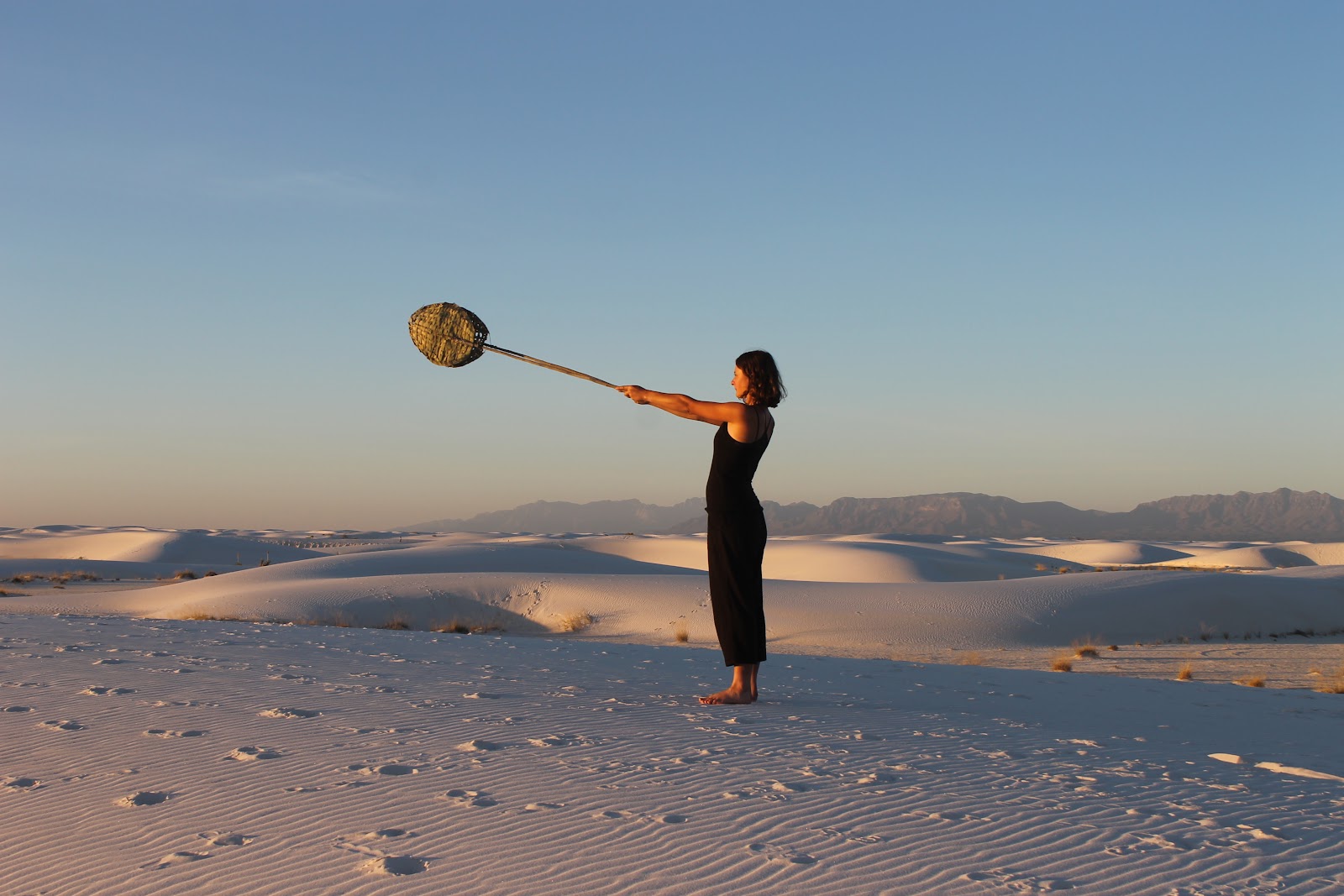
Speaking of production, here I am thinking about being a machine with my Atlatl / giant spoons: https://youtu.be/MarJm6OqMnM


November 20, 2016

Atlatl

By Nancy Dewhurst
Big Bend State Park, TX
November 1, 2016

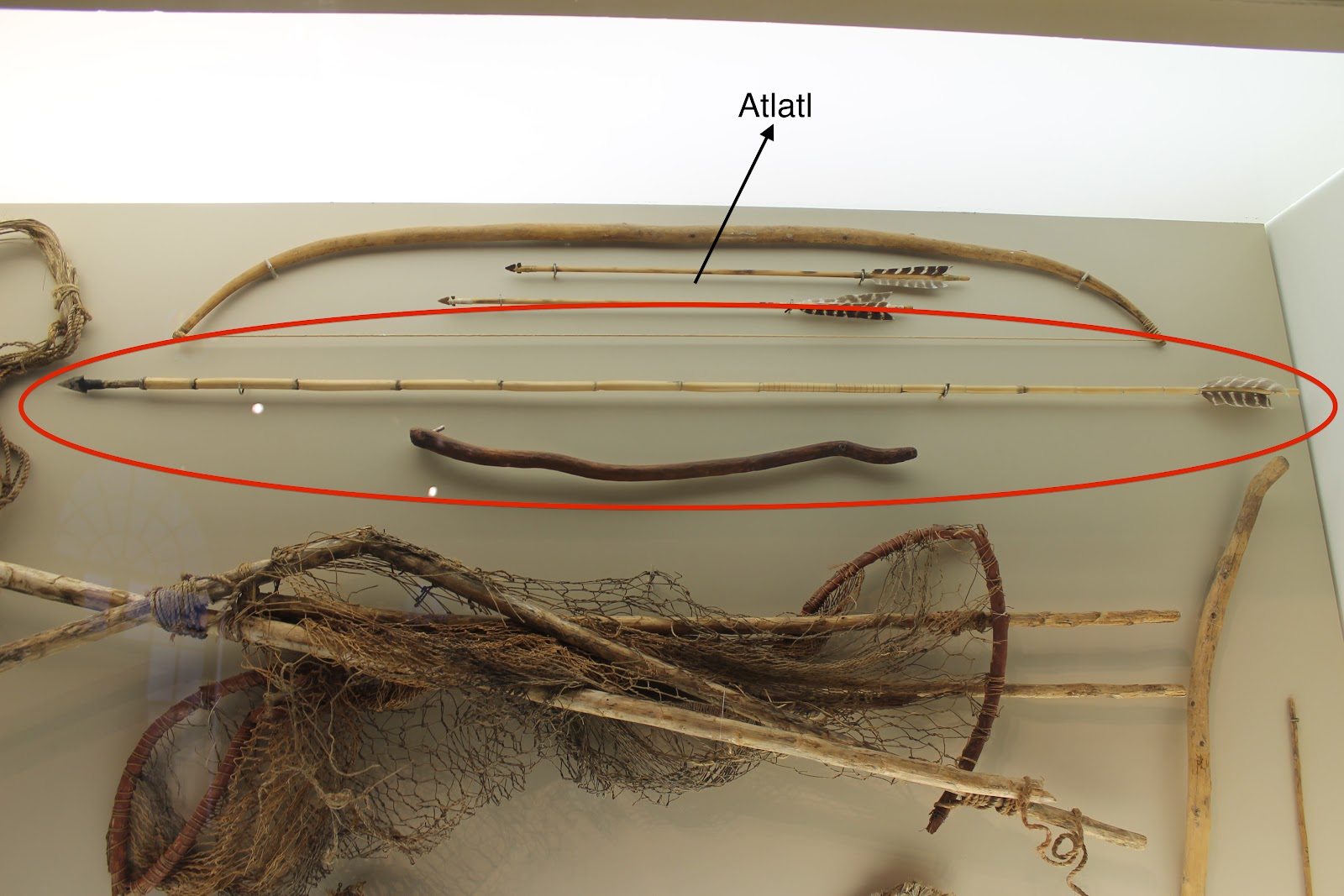
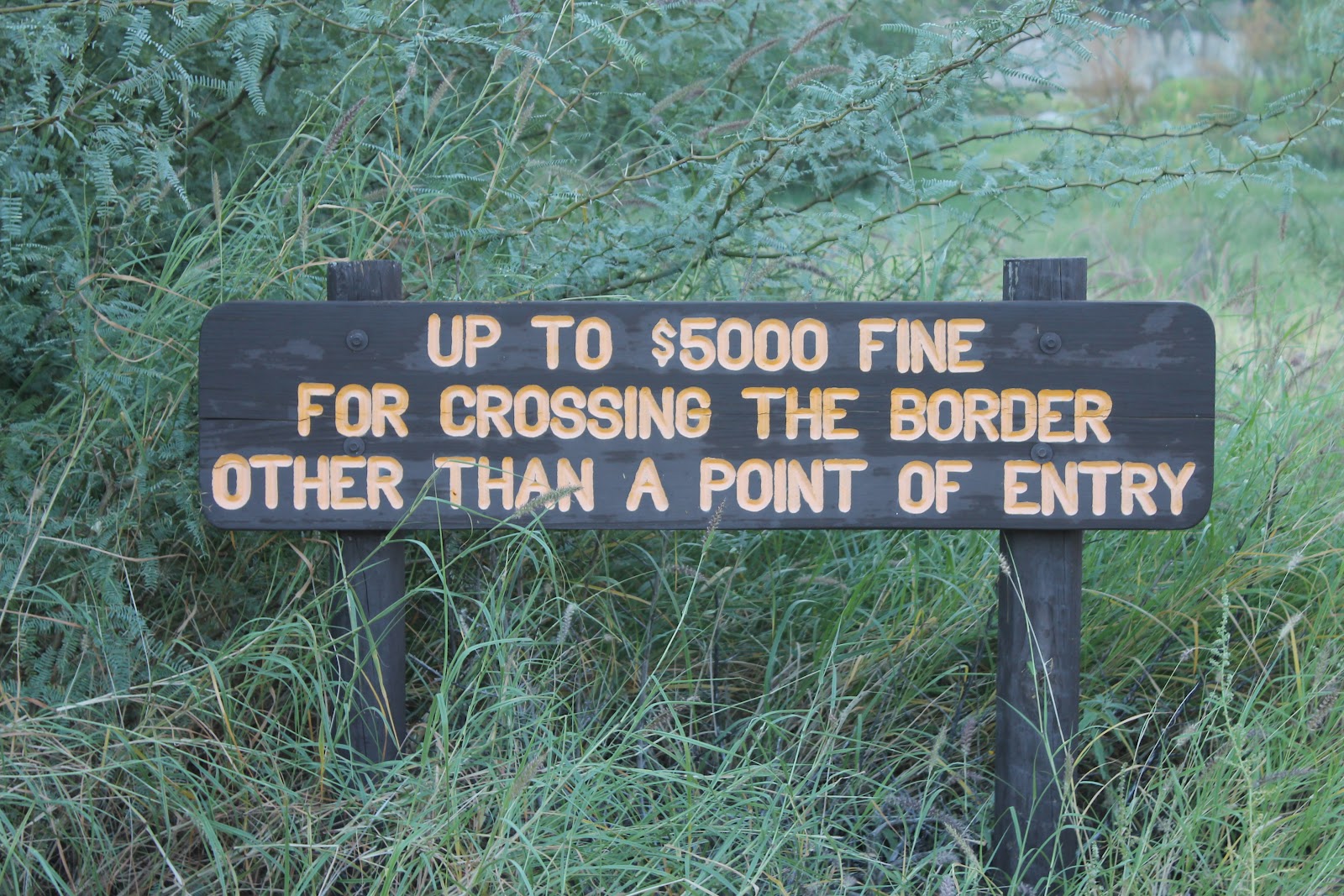
We are at the Big Bend State Park, on the Texan side of the border between Texas and Mexico. The Rio Grande divides the two. At the Centre for Big Bend Studies at the Sul Ross State University we learned about the Atlatl (among other things) - a spear-throwing tool used by Native Americans up to 30,000 years ago in the Big Bend area and around the Southwest. The Atlatl would serve as an extension to the arm, allowing the hunter to achieve greater velocity in their throw.

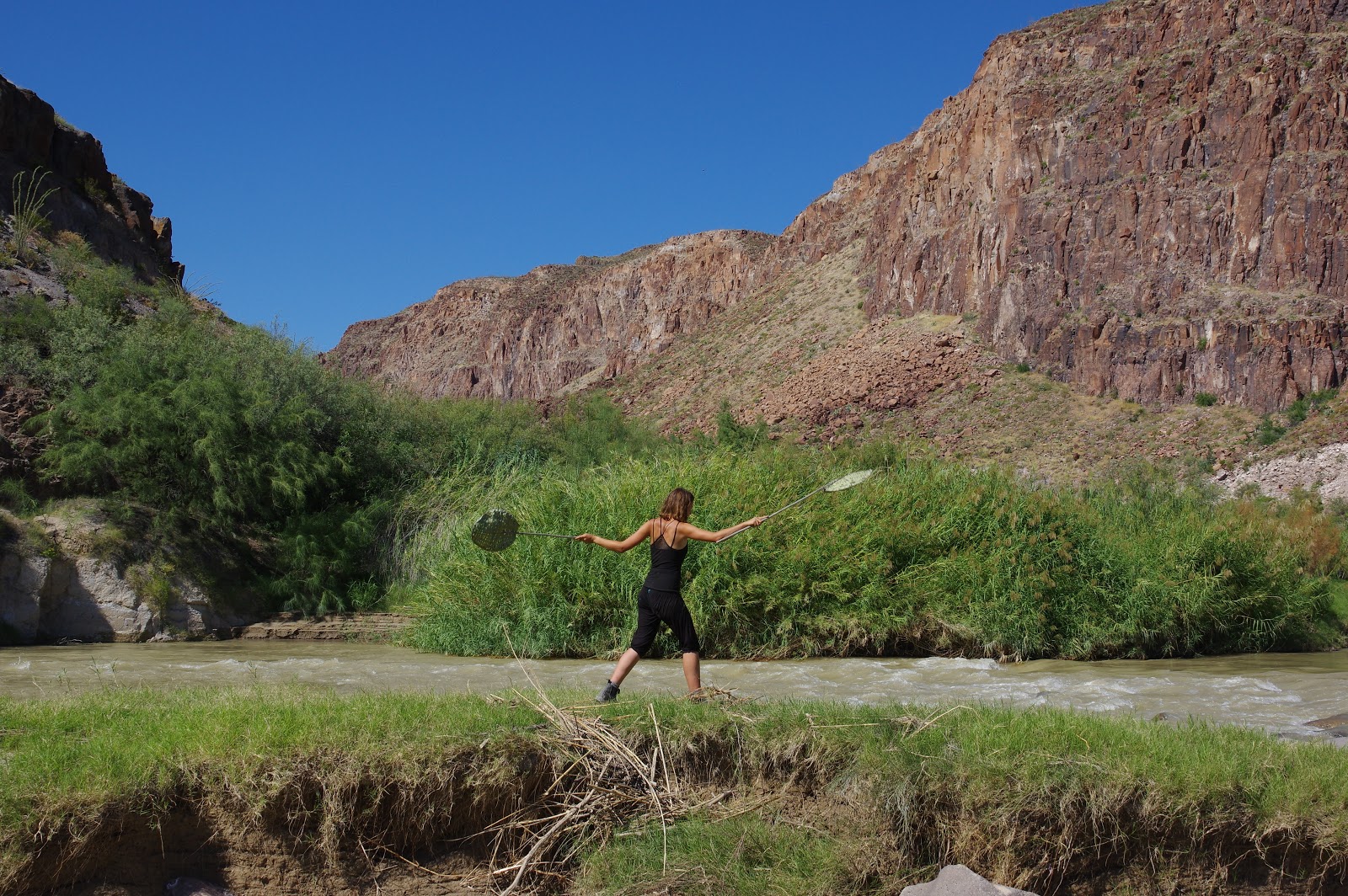
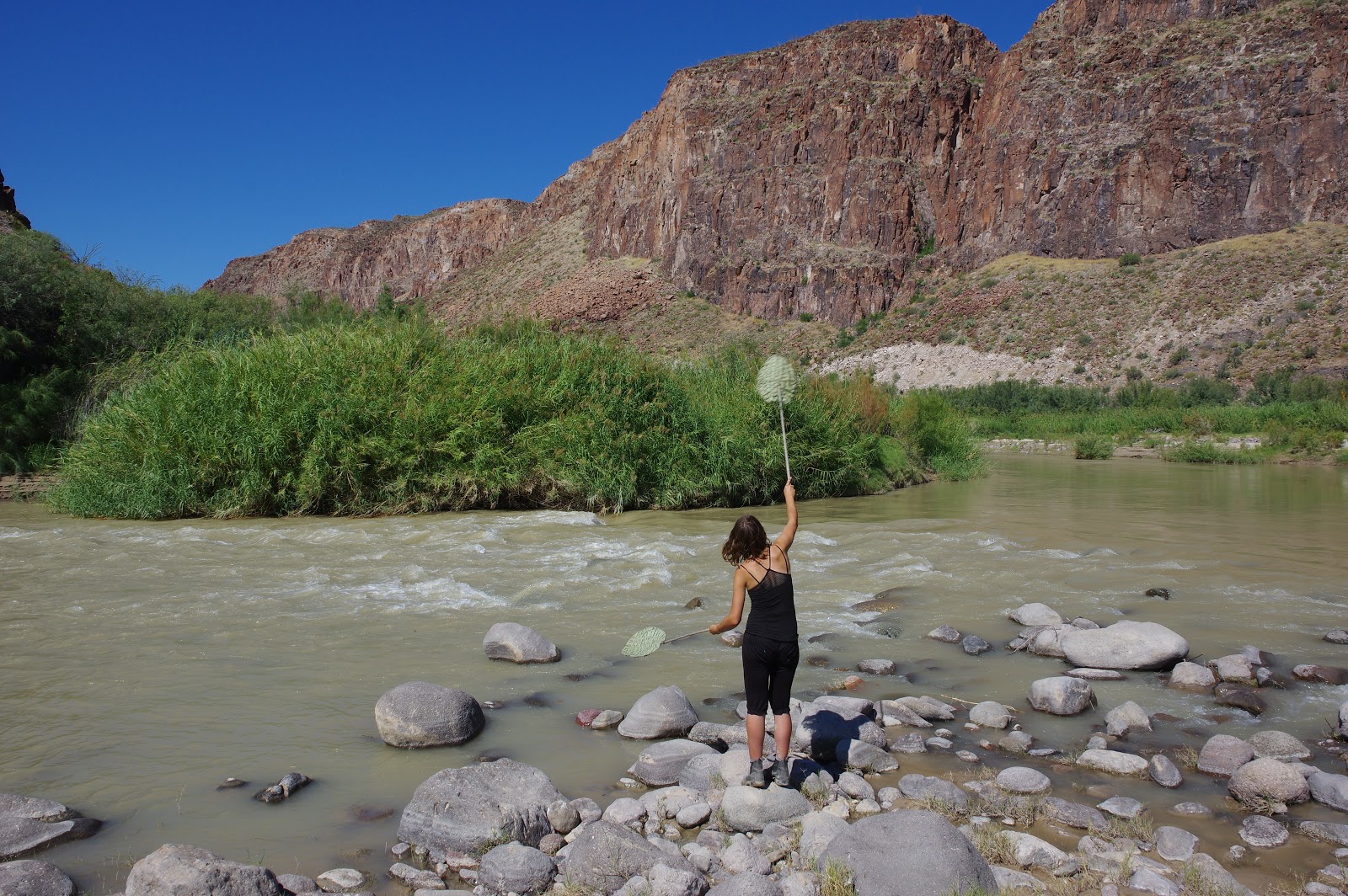
I was enthralled by the idea of these ‘arm extensions’ and immediately began thinking about other devices I could create to extend the length of my arm and my throwing power.

I spent the first two days at Big Bend creating giant spoons - the handles made from Yucca stalks and the bowls made from wire and woven grass.

For the rest of the time I explored these objects, their relation to my body, and their relation to the space I was in. Throwing stones and mud across the river, I explored the notion of ‘border’ - who owns the fluid space of the river? Whirling the spoons in the air, I claimed ownership to the wind.

November 14, 2016

Harnessing the Air in Windy Marfa

By Nancy Dewhurst
Marfa, Texas
October 20, 2016

We are in Marfa, learning about the Trans-Pecos pipeline. I am thinking about man’s bazaar need to claim ownership, particularly over natural resources.


A sketch - Harnessing the Air in Windy Marfa: https://youtu.be/VhbtoP4PhGY


November 9, 2016

Creature Collaboration

By Molly Zimmer & Nancy Dewhurst
Turkey Creek, Gila, NM
October 15, 2016


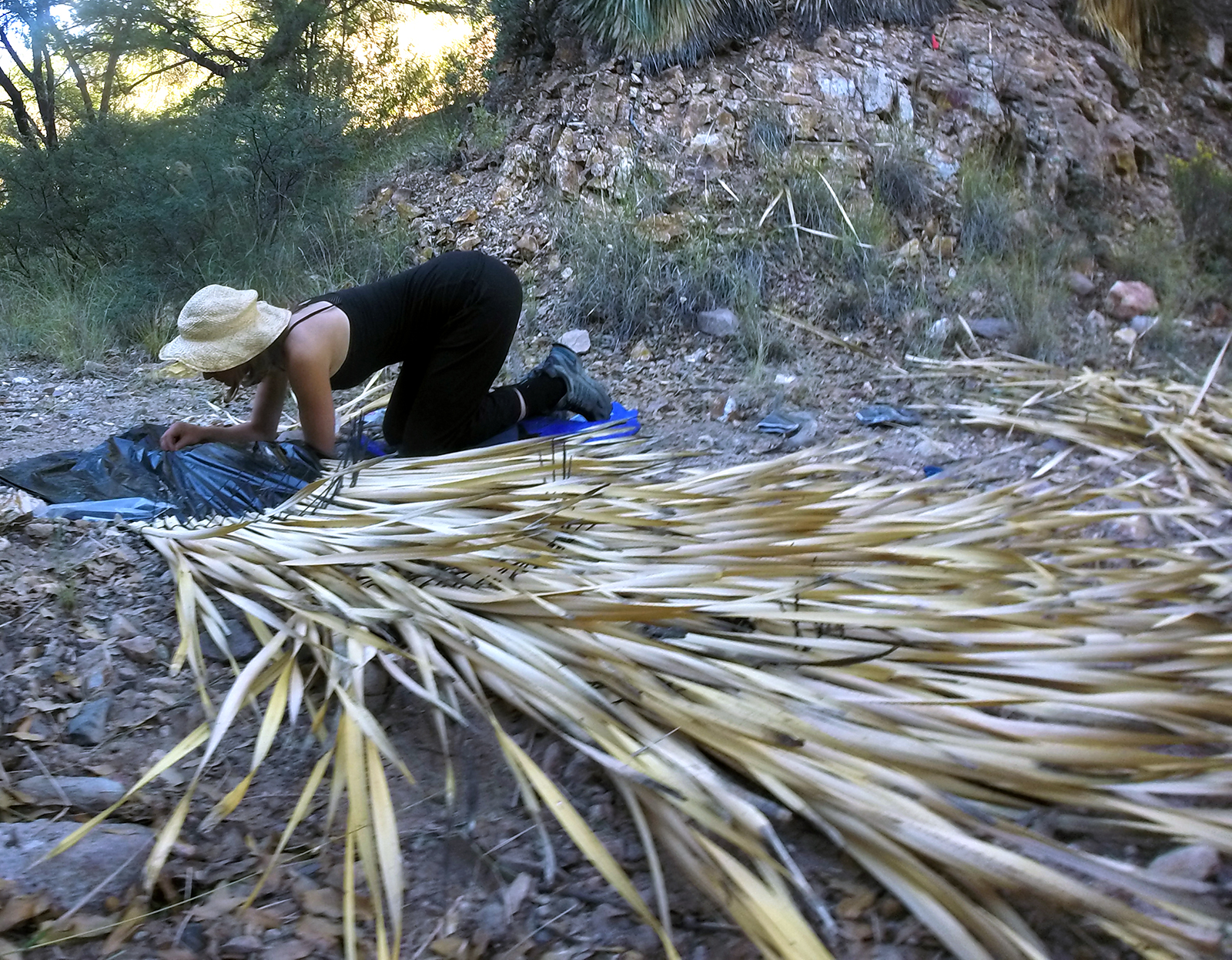
While Land Arts camped on the Gila River at Turkey Creek, adjacent to the Gila Wilderness, Nancy Dewhurst and Molly Zimmer collaborated to create a site-specific garment to be worn over both of them, transforming the local Sotol Yucca stems into a rustling creature that might make its habitat there. They chose the site, Brock Canyon, which is a dry wash at this time of year. On one side of the Canyon is an old abandoned Fluorite Mine, a large sand bar in the middle, and on the other side is a steep wash with rocks softened over time. They harvested nearby Sotol Yucca’s dried blooms and leaves for the suit. They experimented with using blooms for antennae and tied the bunches of leaves with zip-ties in rows onto several large black trash bags.

Nancy and Molly imagined what kind of creature would live in this wash, and how would it have to navigate through the rocks, and would it live in the fluorite mine (as if it was a macro view of all the lizards, and snakes that chose their habitats in the ground).

They hope to put together a video showing a narrative / journey with this creature. In the meantime they have compiled a collection of video clips, which you can view here:


November 5, 2016

River Crossing: A Game

By Molly Zimmer & Nancy Dewhurst
Turkey Creek, Gila, NM
October 14, 2016

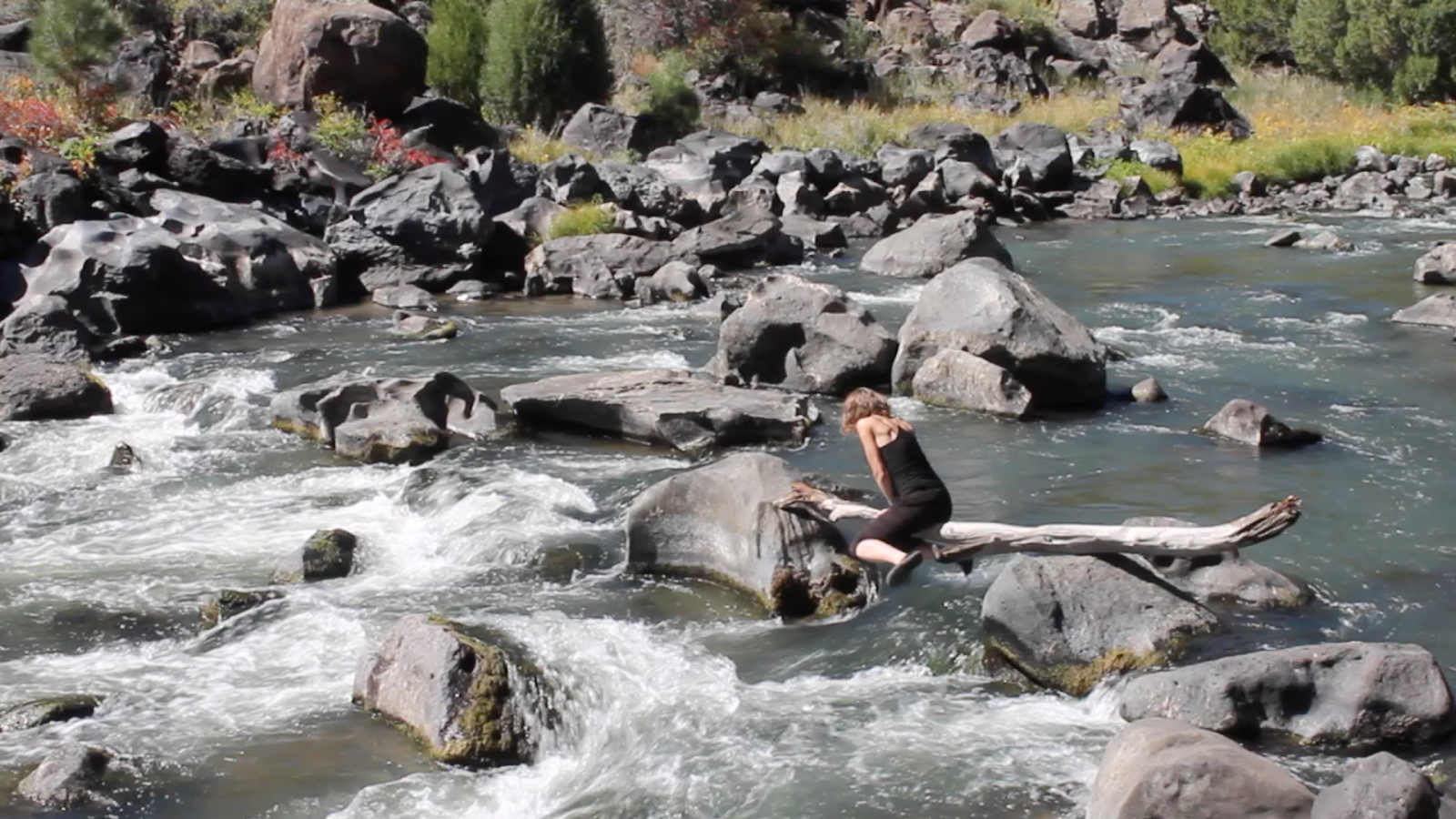
Molly and Nancy’s first collaboration evolved from creating a set of parameters to follow (rules for a made up game) to a larger series of clips addressing the stubbornness of human nature to continue trying to innovate methods with limited communication.

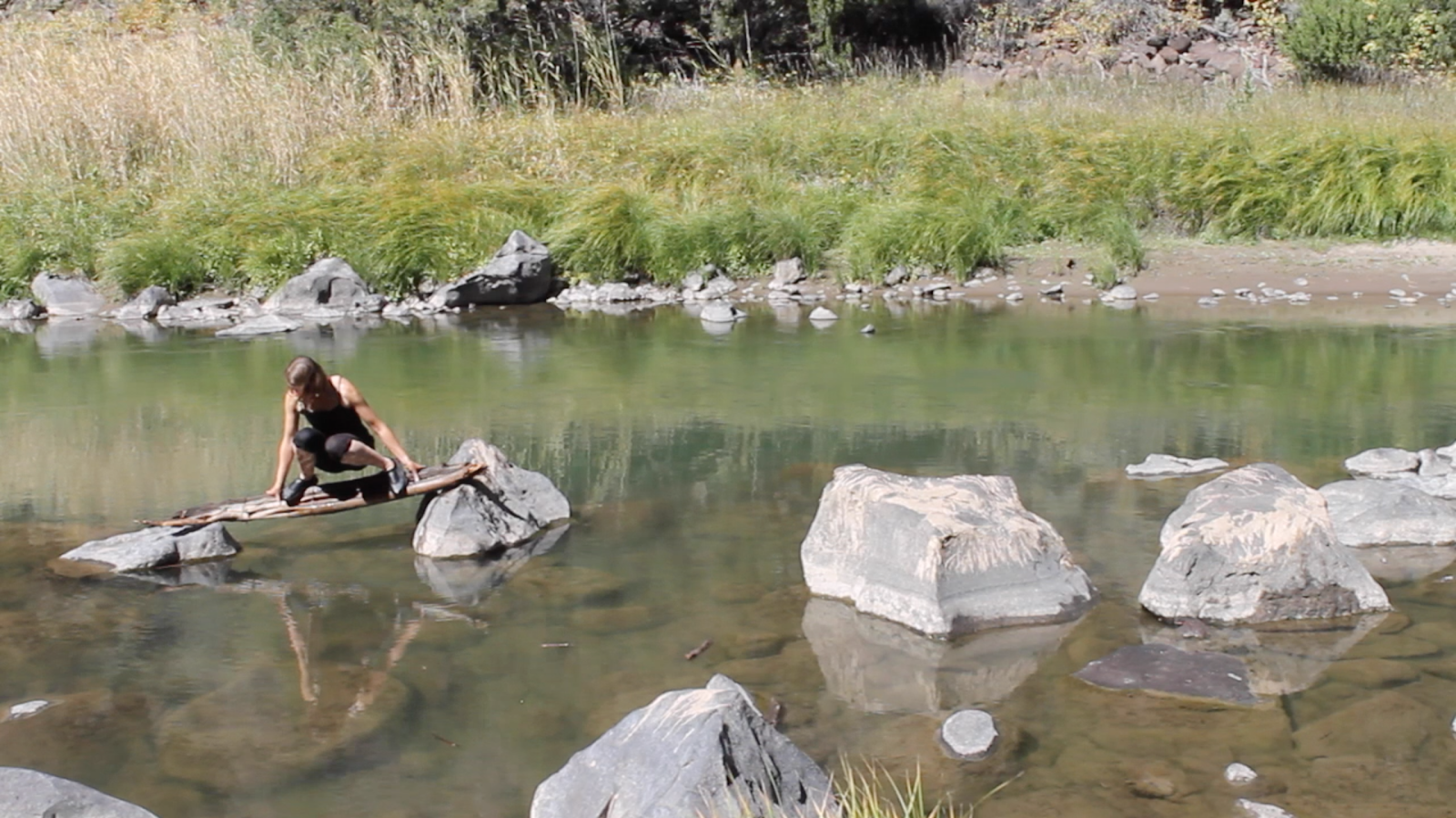
The goal was to cross the Gila River without touching the water at a location we had chosen.

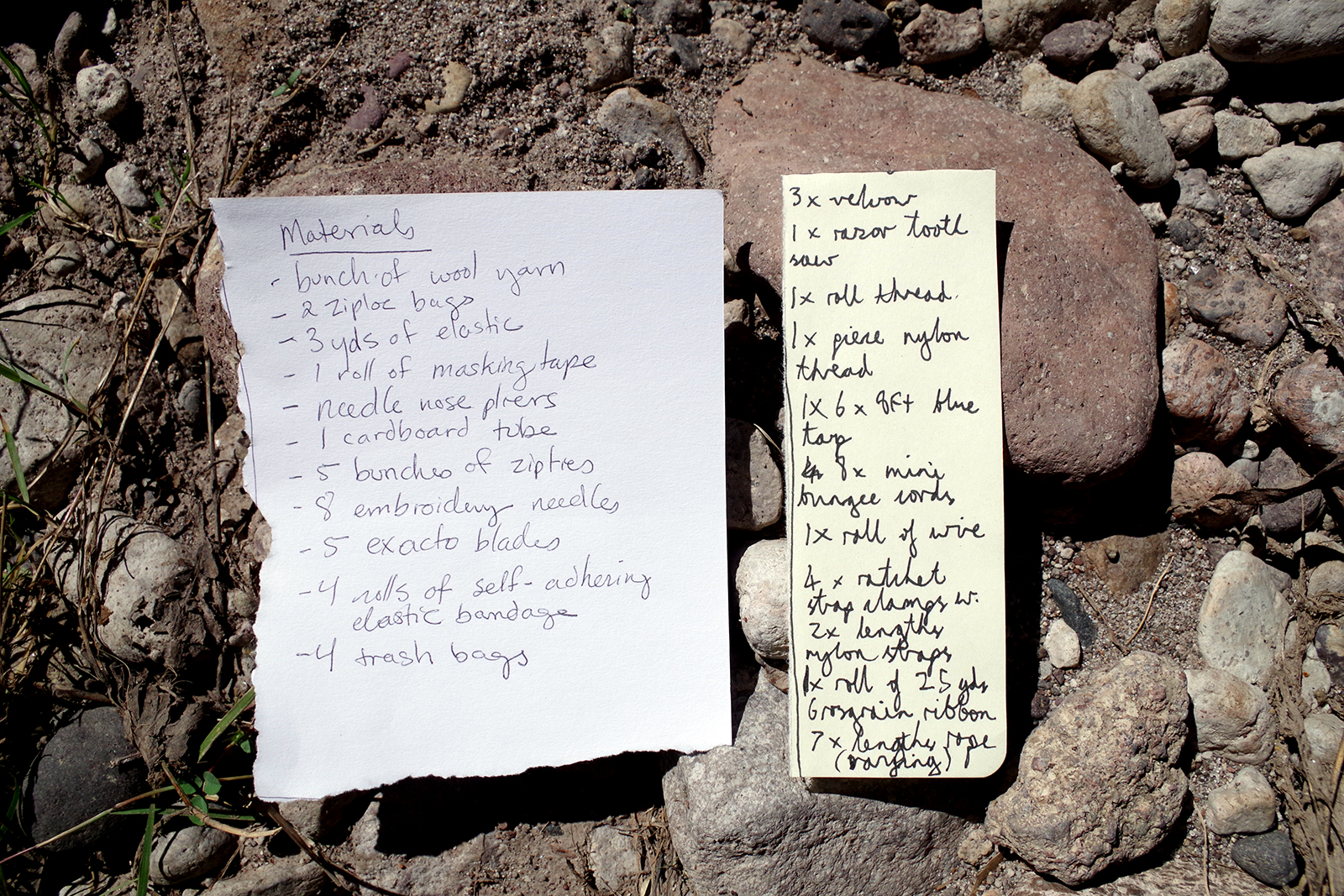
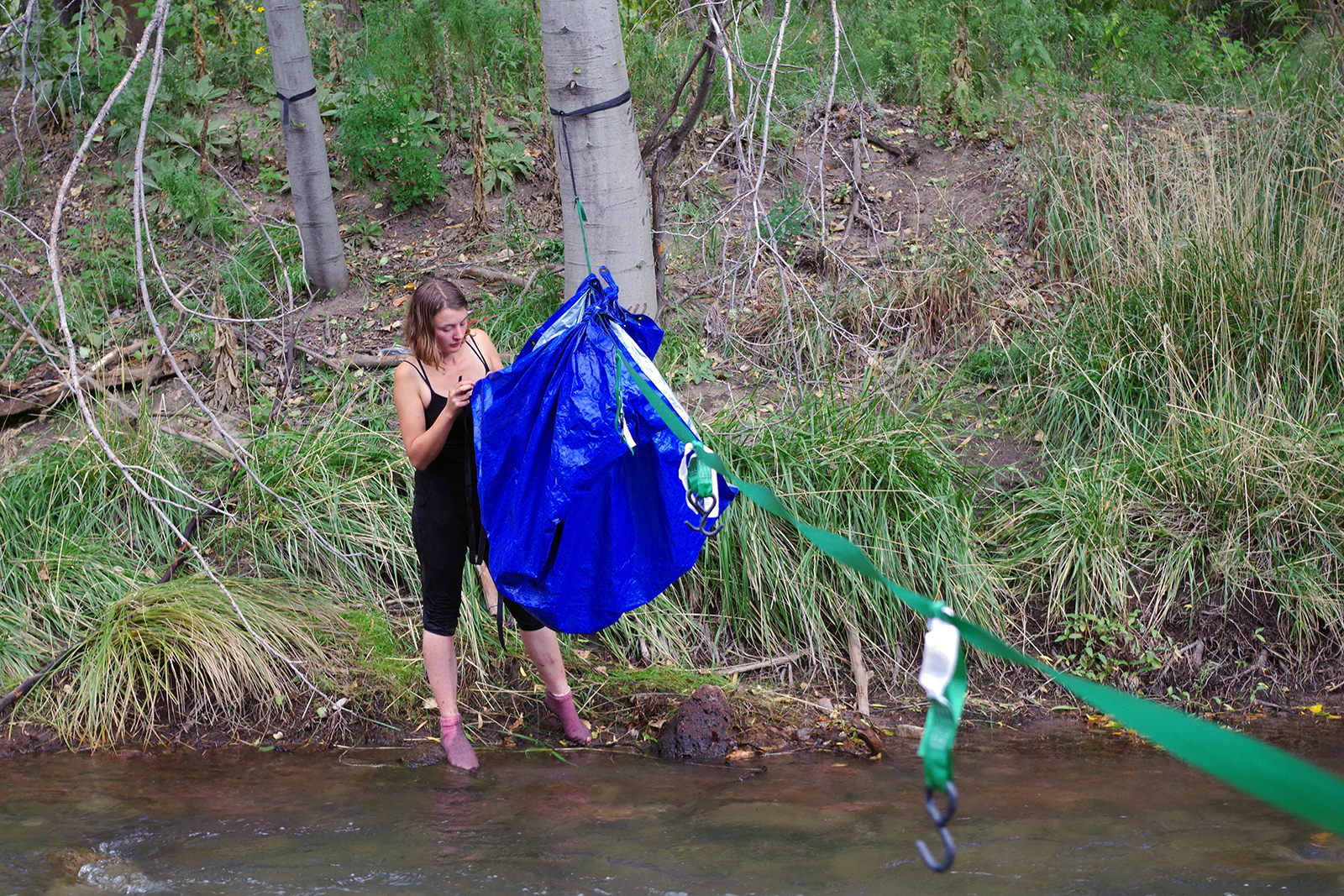
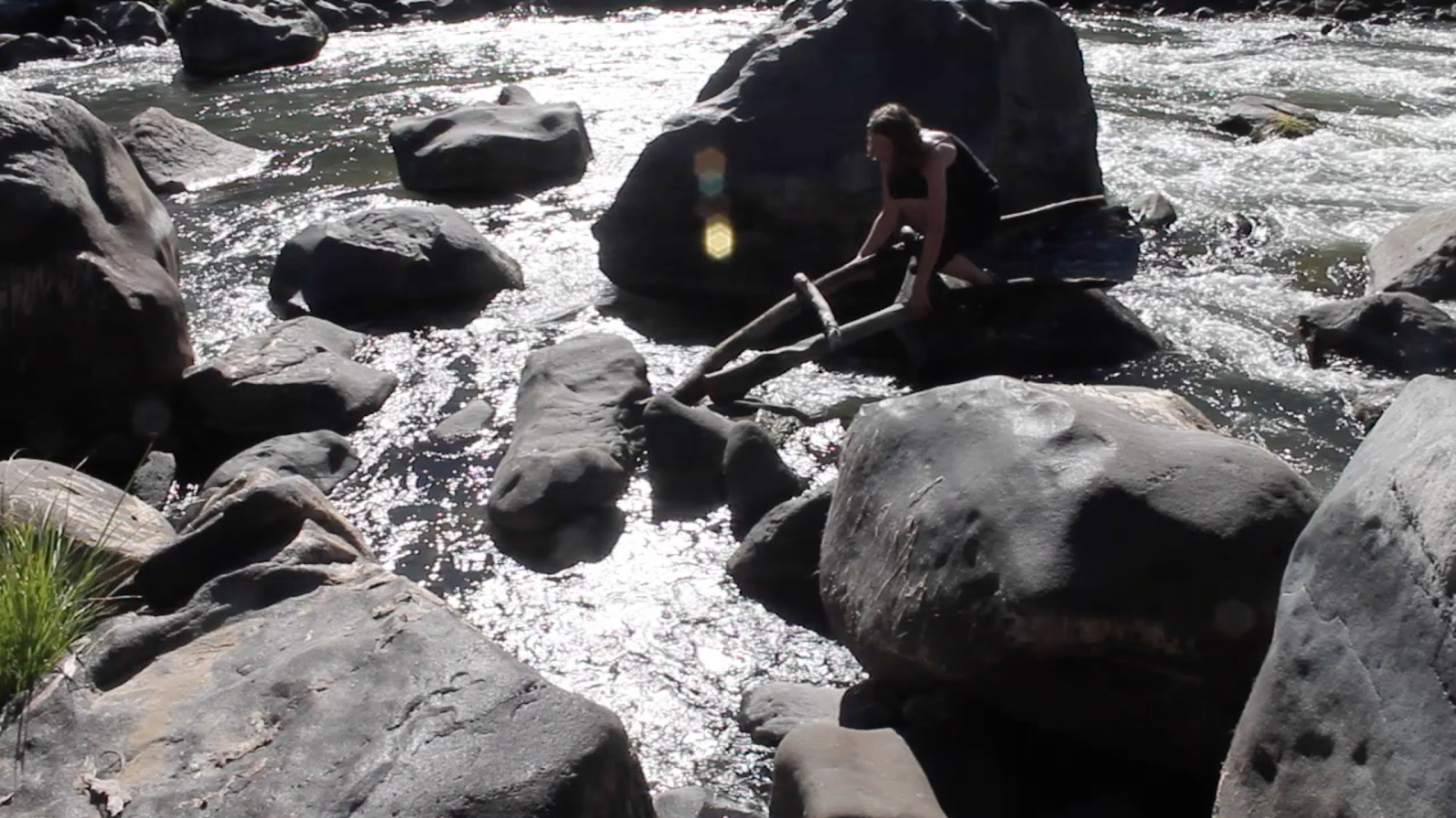
Unloading our packs, we inventoried all the supplies we had on hand and randomly dispersed them between us. As part of the game, we were only allowed to communicate through commands for materials that were to be passed from one side of the river to the other. So, first we had to construct a pulley system to deliver materials back and forth when asked, and when the other person asked for them-- we had to send all of a material. It was a little like playing chess, where you have to anticipate the other person’s future actions based on the material they ask for.

Left: Molly’s list of supplies, Right: Nancy’s list of supplies

In-Action photo of Nancy climbing into man-made “boat” to cross the river on our rigged pulley system.


A compilation of the documentation of the collaboration can be seen here:


November 2, 2016

Crossing the Wide Expanse

By Nancy Dewhurst
Valle Vidal, NM
October 1, 2016


October 19, 2016

Building Bridges

By Nancy Dewhurst
Wild Rivers, NM
September 27, 2016


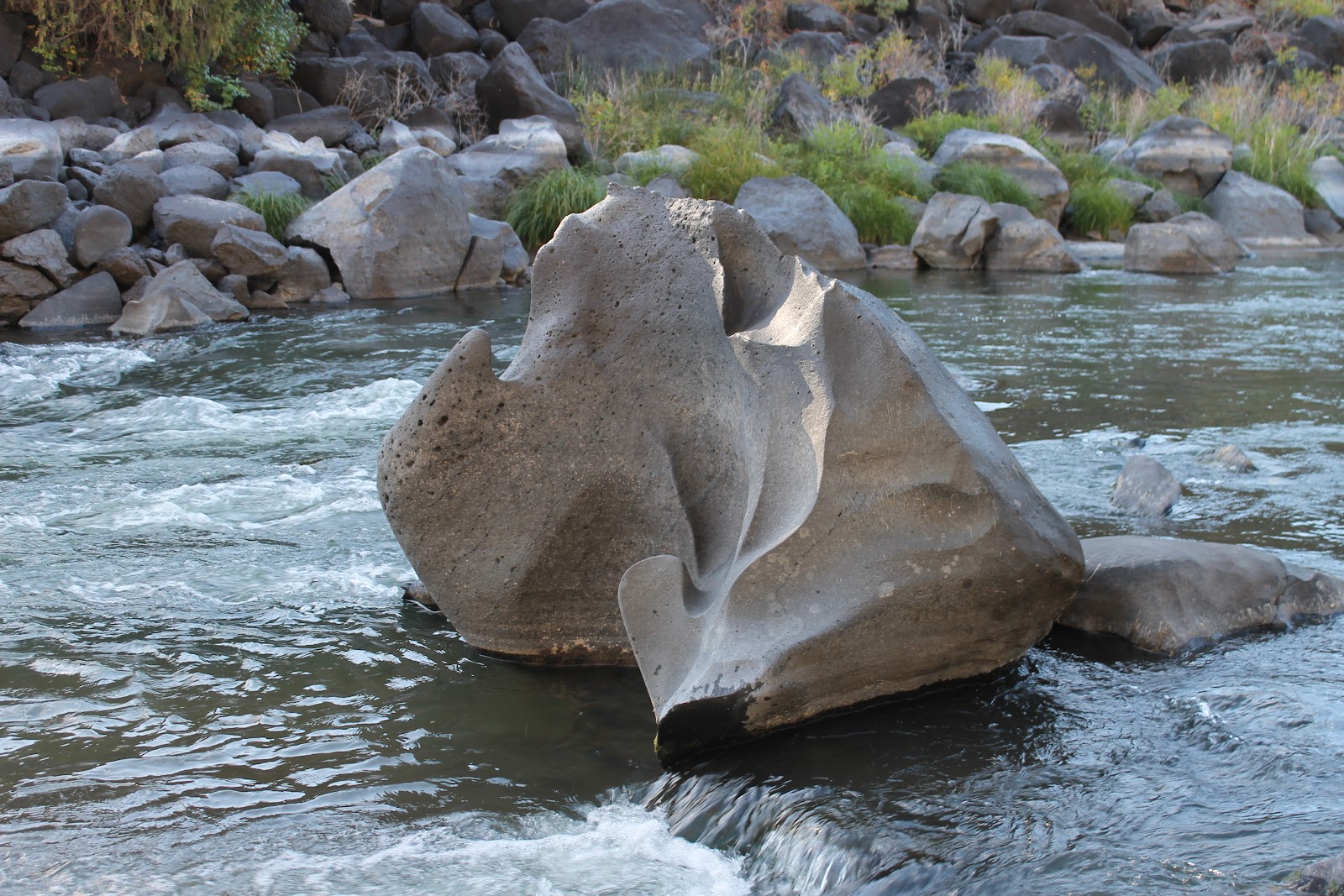
I’m intrigued by the way the water has shaped the rocks here at Valle Vidal - they are hard, solid, immobile, but at the same time soft (some of them almost fleshy).

A rock in the Rio Grande

The water is powerful and fast here. I’ve been working on building bridges to get across to the other side (see youtube links below).

Building Bridges #1


Building Bridges #3


Stills from Building Bridges - numbers 1,2 and 3 consecutively


October 11, 2016

Northern Diné Youth Committee / Dream Diné Charter School

By Nancy Dewhurst
Four Corners
September 22, 2016


We have been staying with Diné elder, activist and artist Larry Emerson at his farm in Hogback, Dinétah (between Shiprock and Farmington). Over the past four days we have seen the disastrous effects of environmental abuse and racism on the Navajo Nation, as well as the resilience and resourcefulness of those who live here. We have met so many people who have so generously given us their time, but in order to do justice in a short blog post, I will focus on just two of them. However, I think the spirit and ethos of these two people is representative of all those we met.

On the 22nd - our final full day - we met with Graham Beyale and Byron Shorty from the Northern Diné Youth Committee. The grassroots organisation is about 7 years old and provides a platform for Diné youth to come together, share ideas and find ways to improve their communities.

On the 5th August 2015 - whilst attempting to add a tap to the tailing pond of the Gold King Mine, Colorado - the EPA accidentally released three million gallons of toxic wastewater into the Animas and San Juan rivers. At the same time the Northern Diné Youth Committee were in the process of growing a community garden. The water they needed for their crops was contaminated, and they were - of course - devastated, but they chose to salvage what they could (about 18% and not to full growth). They used water donated by the Navajo Agricultural Products Industry (the EPA sent water - failing to mention that it would be in oil tanks! The water came out yellow), and help from community members. 32 children from the local Dream Diné Charter School came to work with them. They watered the garden, picked the (limited) crops and shared a meal, all the while learning about hope and resilience - how the ‘river got sick’ but that it can get well again.

Graham reflected upon the importance of the involvement of youth in maintaining a sense of togetherness in the community as well as continuing Diné culture: “I think our culture is evolving”. In response to the project, the elder’s dialogue started to change from: “the youth should...” to “the youth did”.

Graham and Byron have worked with the Charter School to establish a garden of their own. Many of the children’s day-to-day lessons are conducted through the garden - maths, science and so on. Through hands-on experience with the garden the children learn to respect the plants that provide for them, and to continue the cycle. They learn about the idea of kinship and working relationship with all things that power life (not just people). Through gardening the children learn about so much more than the production of something that they can consume. After witnessing the effects of greed and capitalism on the Navajo Nation, the importance of this teaching is increasingly clear.

The below images are of the Dream Diné Charter School garden.


October 3, 2016

Suburbia

By Nancy Dewhurst
Glen Canyon Dam
September 11, 2016

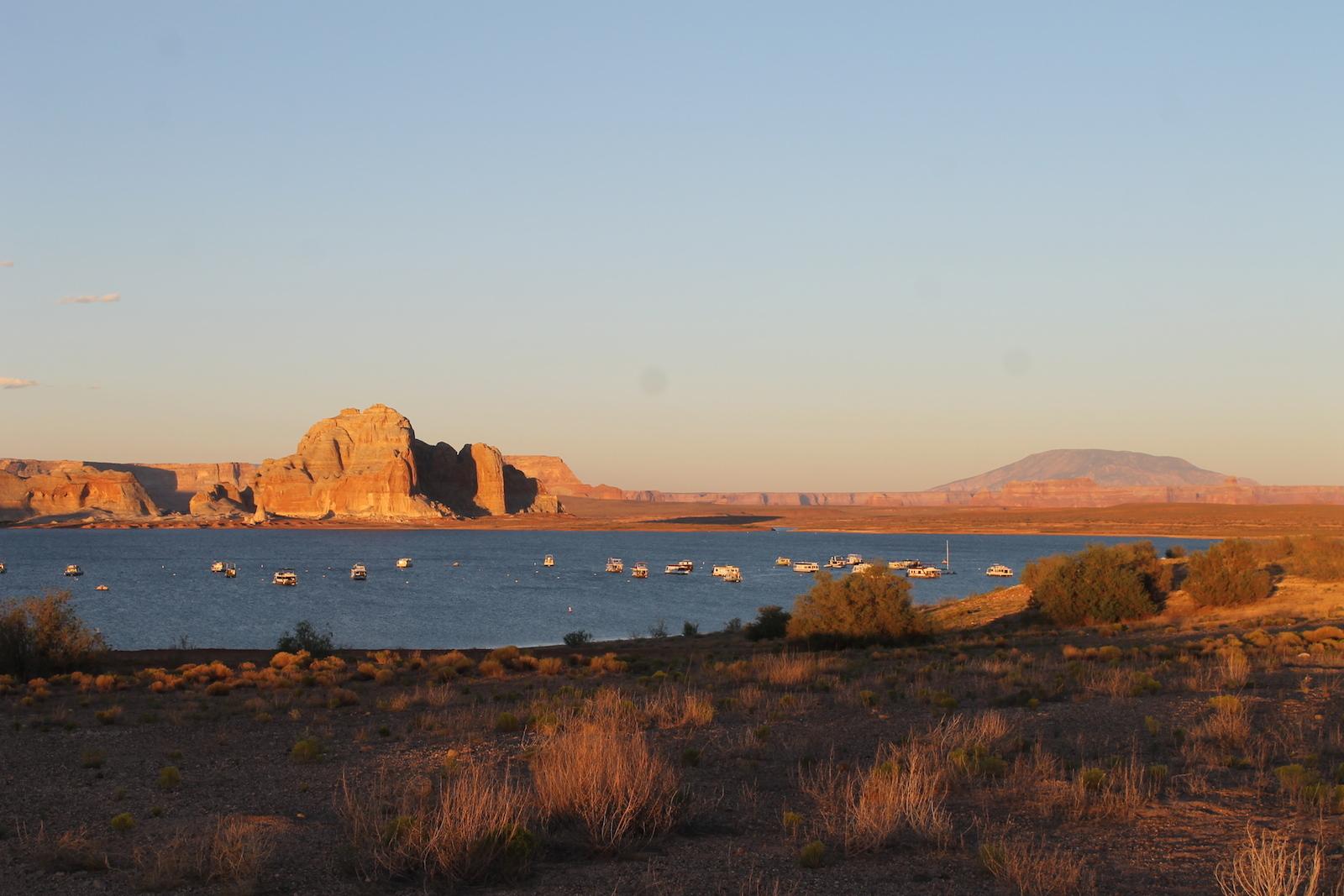
Having left Muley Point, we are now at what used to be Glen Canyon, Arizona. In the canyon’s place is Lake Powell - the direct result of Glen Canyon Dam, opened in 1963.

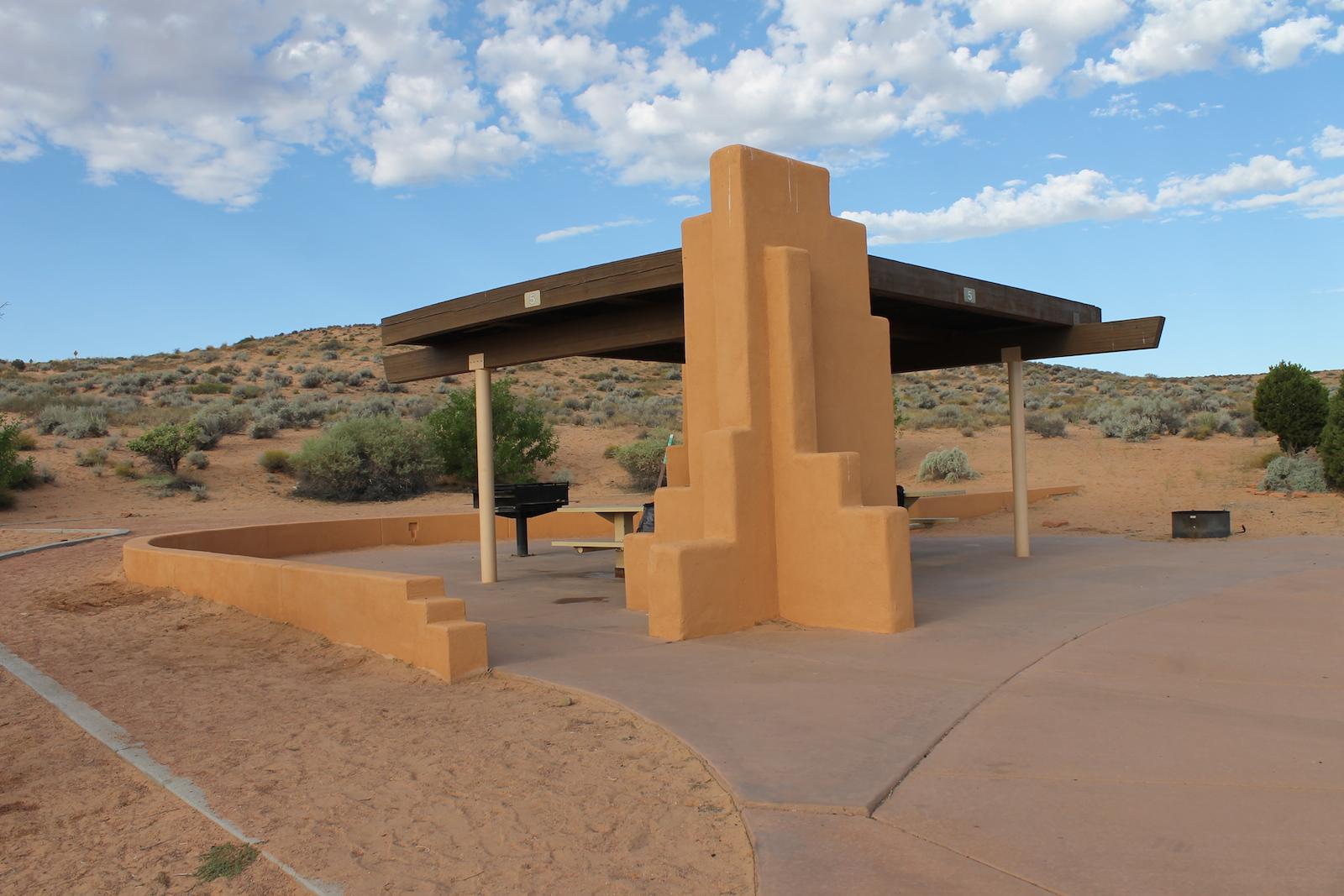
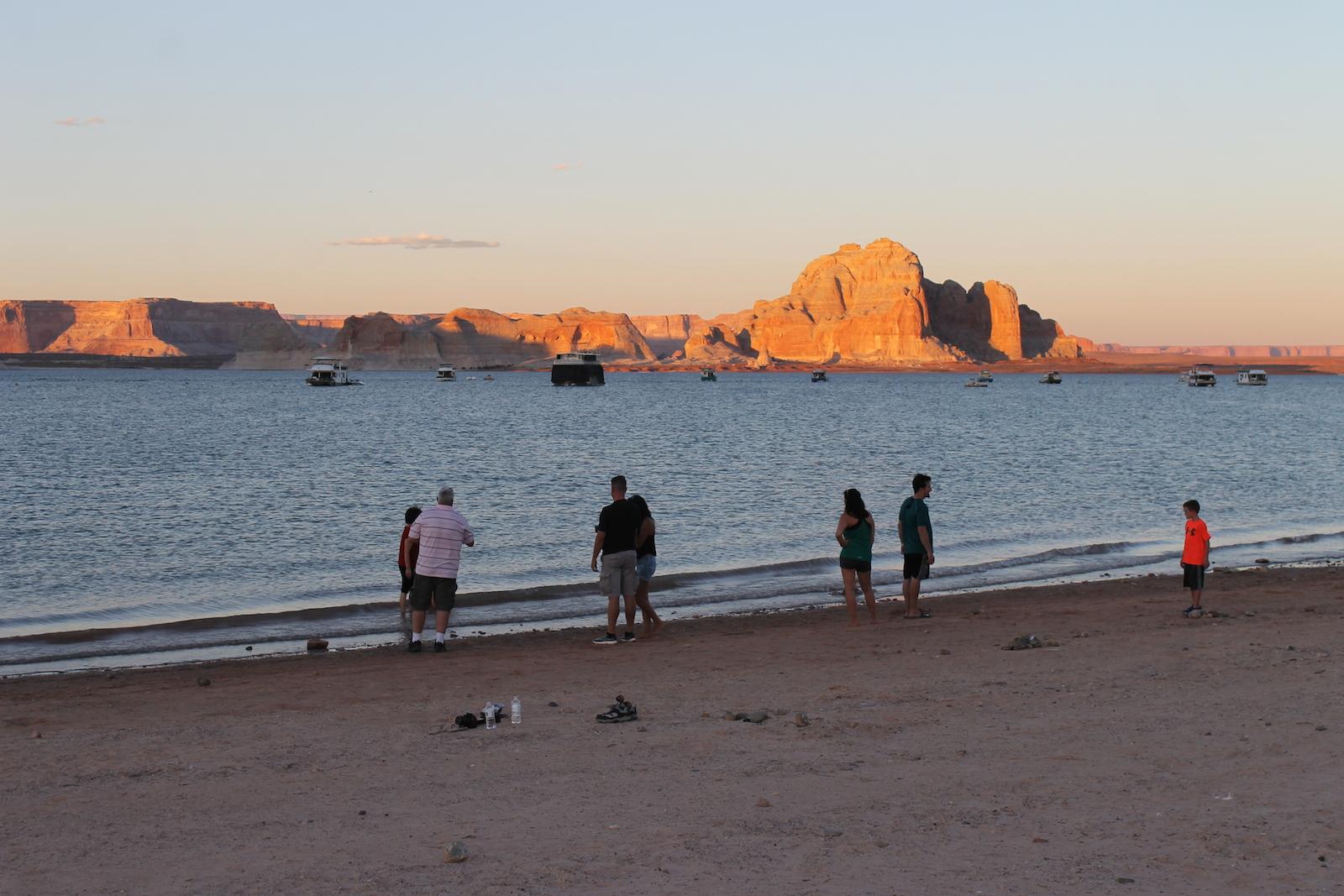
My initial reaction upon arrival at the campsite is how surreal it all is - a hybrid American ideal of nature, and there is nothing natural about it. The campsite resembles a suburban housing estate, campers are allocated identical concrete lots and provided with plush amenities. For some at the campsite, I expect this is what camping, wilderness, and nature is. Perhaps I shouldn’t scorn them - I’ve had the privilege to see otherwise. However, it irks me that every year over 3 million people flock to Lake Powell ignorant to - or perhaps just unaffected by - the reality of the lake.
Lake Powell campsite


Lake Powell campsite
Lake Powell
In many ways (at least to my naïve foreign eyes), the surrounding landscape is similar to that of Muley Point, and I can’t help but make comparison to my last post. Isn’t the damming of Glen Canyon comparable to the clumsy footstep that breaks through the Cryptobionic crust? But on a gargantuan scale? Short sighted human intervention undermines hundreds and thousands of years of nature’s progression, let alone countless sites of natural beauty and of great historical and archaeological importance. At its deepest point, Lake Powell is 560 foot. What wonders are hidden beneath, never to be fully appreciated? The life expectancy of Lake Powell is 700 - 1000 years. On a Geological time scale, this is miniscule. What right do we have to cause such destruction, for such short term gains?

Of course, I’m talking as though I am ‘other’ and separate from the situation, when in reality I am part of the cause. I have chosen to live in a desert for 5 months, and am unavoidably contributing to the demand for water by consuming it.
A family at Lake Powell

September 27, 2016

“Don’t Bust the Crust”

By Nancy Dewhurst
Muley Point

September 6th, 2016

Last night we arrived at Muley Point after an eventful day of exploding fix-a-flat. I slept outside in a Tijana due to fear of my tent blowing over the edge of the mesa.
A Tijana (not the one I slept in)


USB EQUAL:Nancy :Trip 1:3.Muley:09.09.16:20160909_muley_solo_ned_0029.JPG
Cryptobionic soil
Its humbling to be in a place that is so much bigger than myself.

This is ‘Cryptobionic Soil. This organism is a mixture of bacteria, lichen, and fungi.  It is formed over many (perhaps hundreds) ((perhaps thousands)) of years. It is incredibly delicate and does major work for the arid desert soil.  Not only does it break down rocks to create that soil, the crust it makes permeates the horizontal sphere and delivers far-off nutrients to plant roots, as well as holding the vital (and tiny) amount of moisture in the soil.  Years of work can be undone in a moment by a careless footstep breaking its crust, and it can take up to (or more than) 50 years to repair itself.