Showing posts with label jess zeglin. Show all posts

December 1, 2018

unexpected lullabies

unexpected lullabies
White Sands National Monument/Missile Range, New Mexico


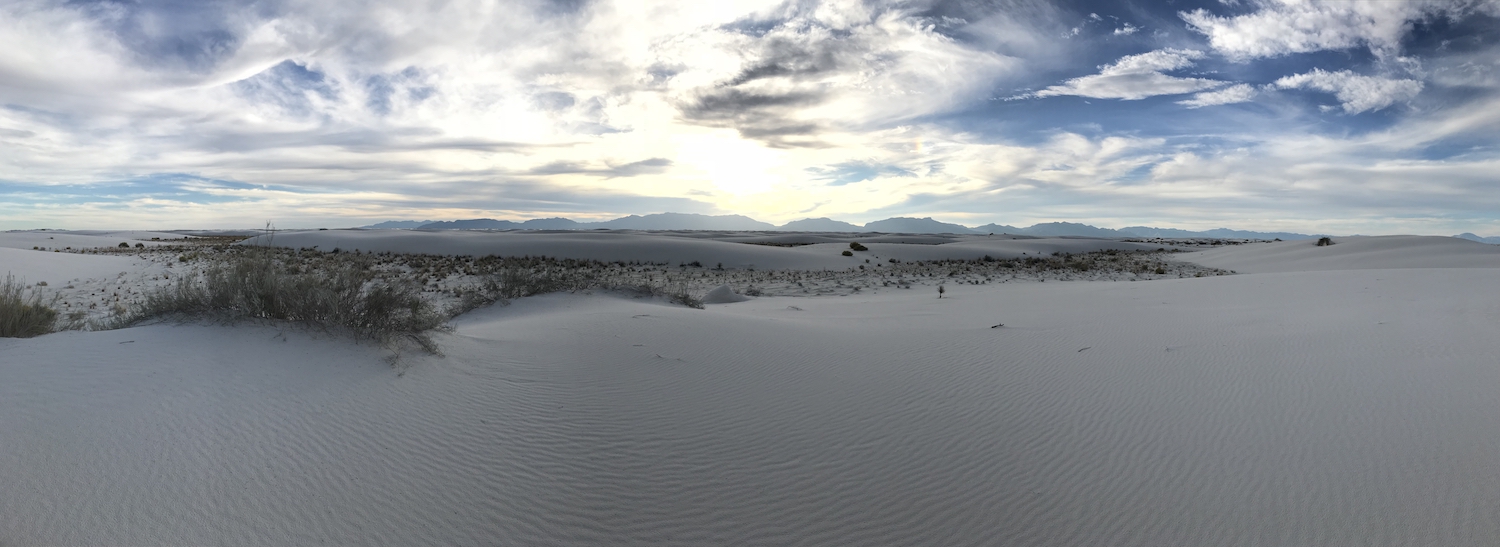
It’s 9 am on a late October morning, the day before Halloween. The sand is still cold from the night before, but the sun is already starting to slow broil the right side of my body as it travels in its long arc. I am facing North, sitting on a sea of white sand, and listening to airplanes.


I thought I would hate the jets as militaristic intrusions, as symbols of violence and dominion. Instead, I find myself tuning to the long slow cadences of sound they produce, waves of motion casting themselves over a drifting land. Combined with the strangeness of white sand and blue sky as the only visual, my current level of exhaustion (after staying up too late to watch the moonrise and getting up too early to watch the sun), and the feeling of unreality that pervades this whole place, they become a kind of rumbling lullaby - a tumbling, rolling surf that comforts me toward sleep.


Occasionally a bird meeps past. A single ant explores delicately through the sand. Children yelp as they slide down the hillsides. But mostly it’s just me, sand, sun, sky, and the lullaby of the fighter jets.


November 26, 2018

wilderness of human desires

wilderness of human desires
Gila National Forest, New Mexico


I wanted the Gila to be a place of reflection and quiet. Instead, it was full of humans. Humans, including us, all wanting something from the place. A club of backpackers heading upriver for an overnight, couples and families driving up the bumpy road to get to the hot springs, folks on four wheelers tearing up the dirt tracks, trucks full of hunters looking for mule deer and a good time, and a couple of flat white institutional vans full of dirty college students looking for some kind of wisdom.


The Gila river was unusually high because of unexpected post-monsoon rains (thank you, rains!). To hike upriver you had to cross the rushing water several times, which left every hiker with the option of (a) wearing shorts (b) getting their pants soaking wet with cold river water or (c) just hiking in their underwear. On our last day in the Gila, while wearing shorts (we try to learn quickly), Erin and I ran into a group of men - hunters - carrying one bow, one muzzle-loading shotgun, and a lot of sheepish looks on their faces to be caught crossing the river in their underwear by a couple of fully dressed girls. They asked if we’d seen any wildlife, and we lied and said no. Well, did our group want to party with them that night anyway? Not particularly. 


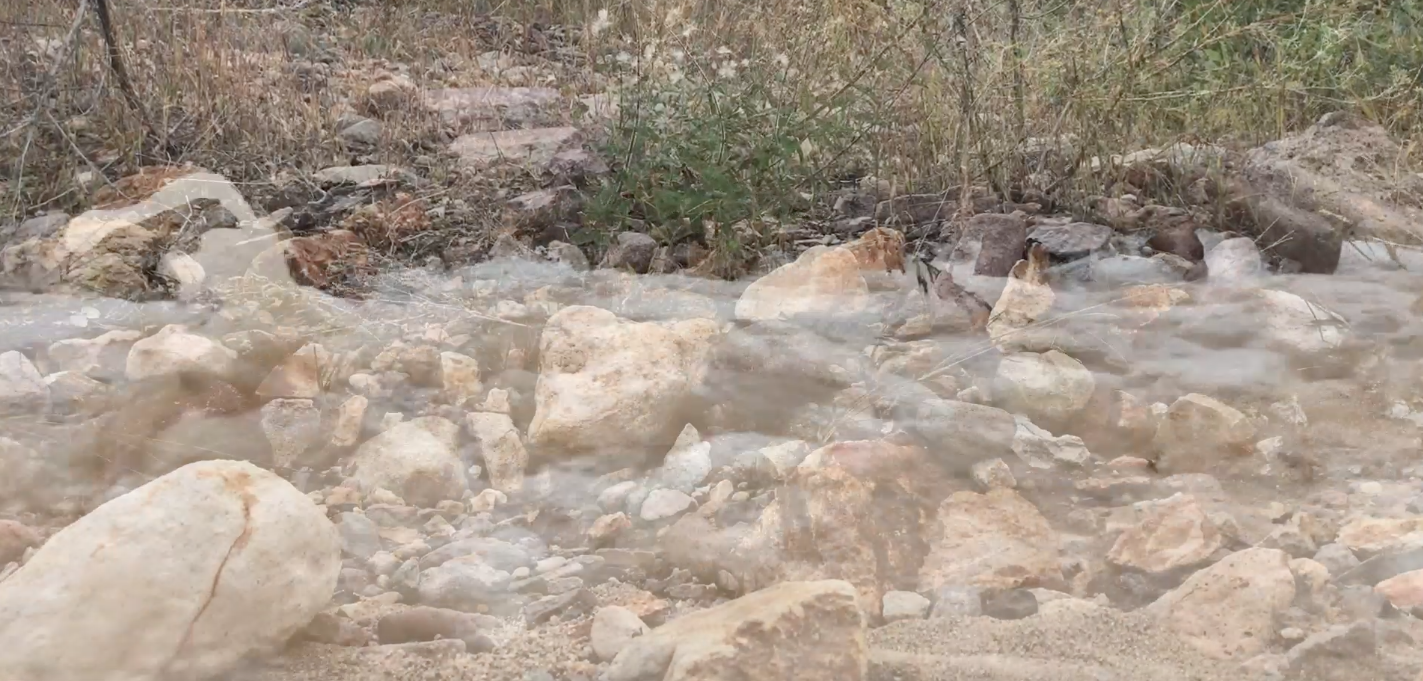
This was the tenor of a lot of encounters I had with other humans in the Gila that week - an awkward crossing of paths between people who didn’t really understand each other. Several people assumed that our group was a science class, and I talked to them about how we’re interested in both art and science, and that we come here to learn from the place and make artwork about it. “Oh, so you draw then?” was a common response, people understandably trying to place what I was talking about into a frame of reference that they were familiar with, paintings or drawings on a wall. “Well, some of us do - we’re more interested in ecology overall and using whatever mediums fit what we’re talking about,” I said, not really clarifying anything for them. I surprised several people by popping out from inside the streambed I was filming and then attempted to allay their suspicions by saying, “oh, it’s ok, I’m an artist!” This chipper statement did not diminish the confusion on their faces. But, it was good practice for me in trying to be active as someone not fitting into any particular known categories of activity (hiker, hunter, partier) and also trying to explain why.


I know it seems strange for me to be writing about humans when we in Land Arts are usually concerned with the landscape itself, that mystery of overlapping non-human lives that we humans usually either ignore, destroy, or romanticize. But it bothered me that at this remote site in the Gila, several bumpy hours from food or potable, from-a-faucet water, the valley we camped in was full of humans. What was drawing us all there? Everybody seemed to be looking for something, even if sometimes we didn’t know what it was ourselves - some to get away from the eye of society to party, some to hunt, some to relax, some to inhabit “the mystery of nature.” All of us looking to either get away from something or get to something else, all of us unsettled, reaching, unsatisfied.


After everything we’ve done to this earth, what does it mean that we still go back to it in search of something different, in search of a way out? Doesn’t the land itself deserve a wilderness, one without any human presence, a place to be itself without our ubiquitous neediness constantly butting in? As much as I personally feel a need to go to these somewhat away-from-other-humans places, to feel and learn from different kinds of life - I still want there to be places where humans can’t go, where I can’t go, at least a few lands left for all of the others. Can’t a wilderness be a wilderness on it’s own?

November 20, 2018

dogs bark, crickets chirp, agaves grow

dogs bark, crickets chirp, agaves grow
in and around Patagonia, Arizona
Jess Zeglin


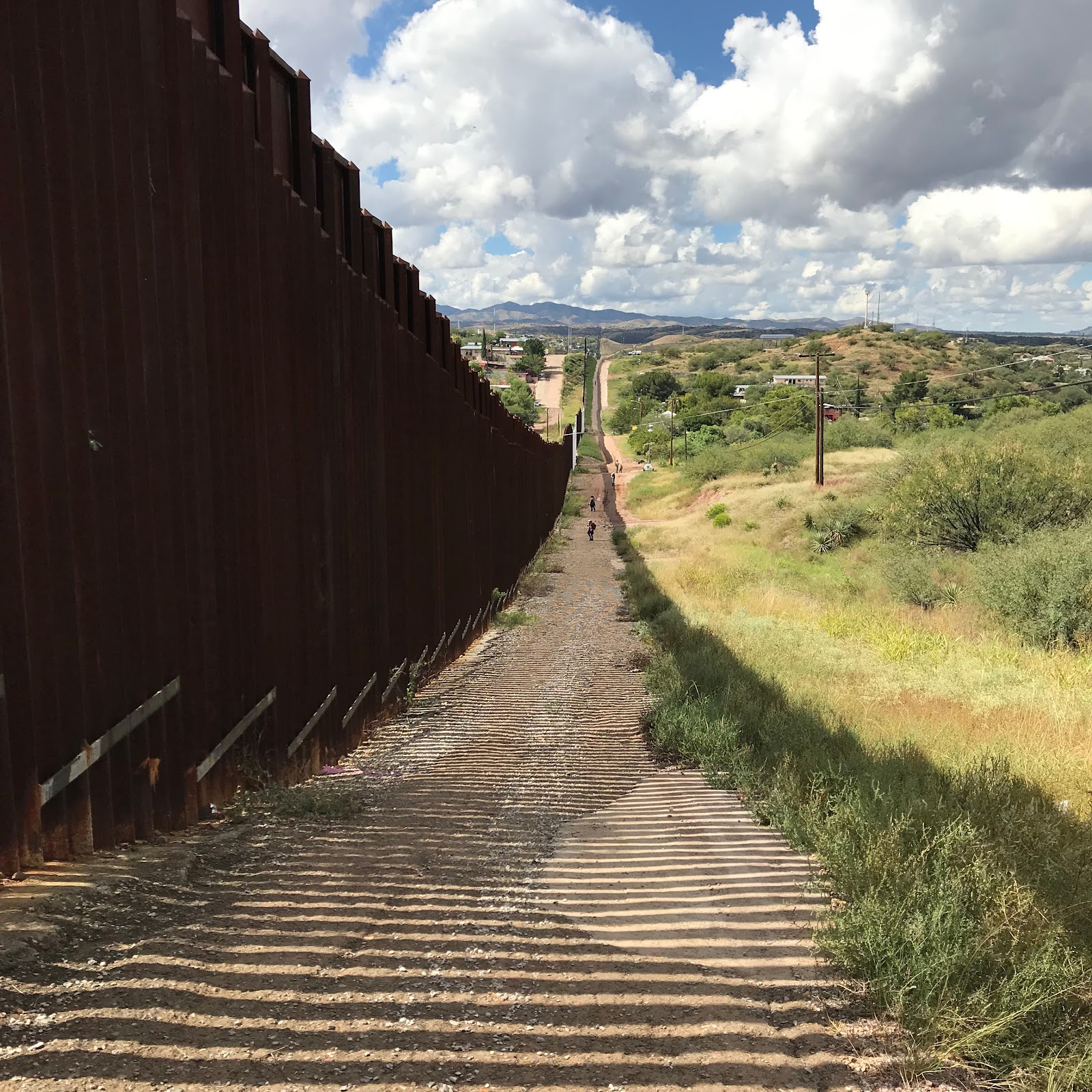
A dog stands barking at the intersection of the Calle Internacional and a street I can’t see the name of through the fence. She is casually informing me not to infringe on her territory. I wanted to make friends with this dog, but in order to do so I would have to climb up and over the massive barrier or find my way to one of only a few border crossing and the many bureaucracies, fears, and threats awaiting there. Instead, the dog and I just stare at each other while I wave hello and she continues to bark at the strange human across the street. For several minutes this interaction occurs, me waving and saying hi, her barking to determine if I really am a threat. Am I? Physically, no - I would never make it on the climb up the three story monument to nationalism sitting between us. Politically, socially, maybe I am. Eventually the pup decides I’m not worth the trouble. She slumps down into a good-natured pile of fur to nap in the sun. I walk away from her, footsteps crunching on the gravel of the border patrol road, back to the American side of a landscape that has no interest in being divided.


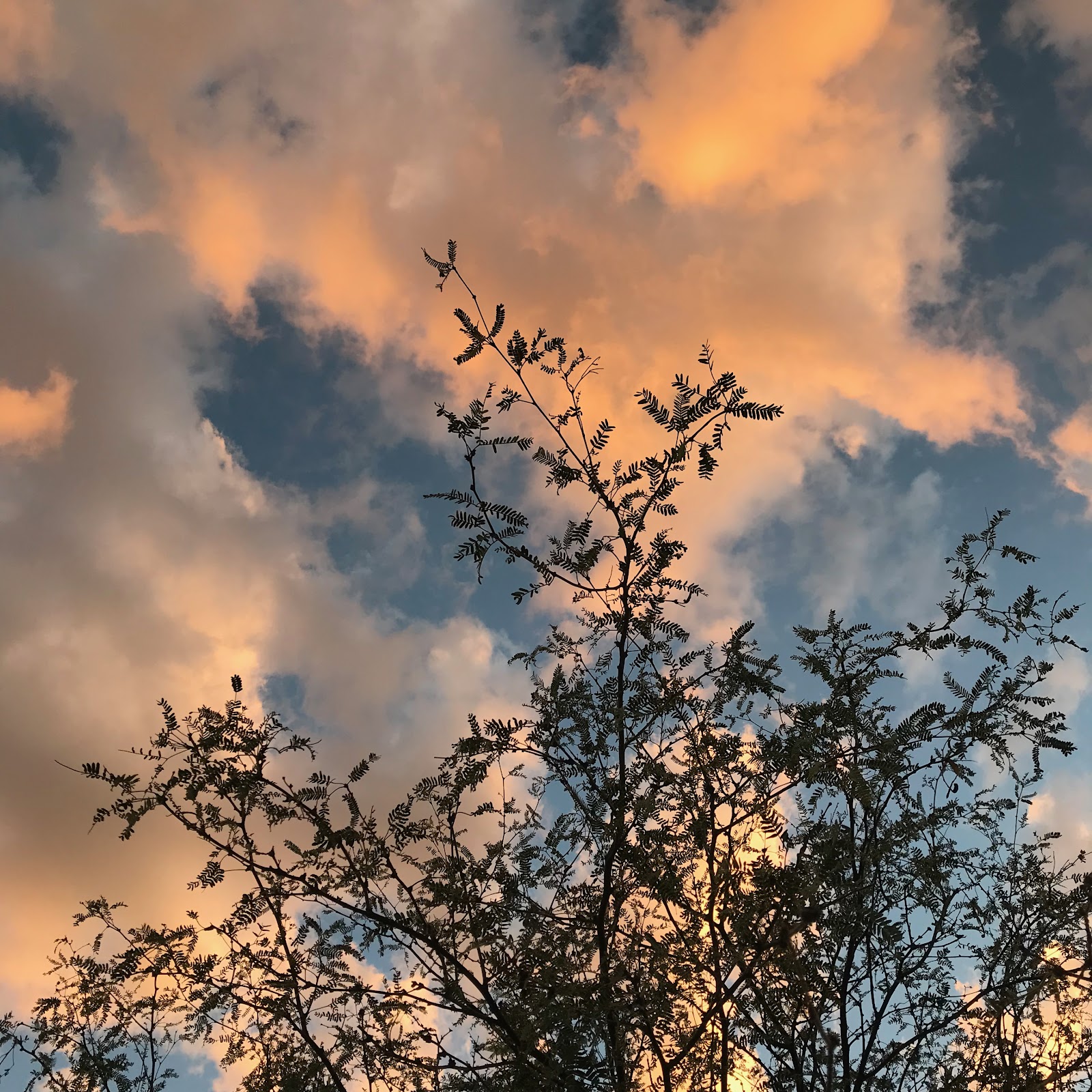
Standing in a field of tall grasses at dusk, recording a constellation of cricket sounds while feeling the oceans of grass rustle around me. I’m standing as still as possible to get decent audio, attempting to ignore the hungry, itchy mosquitos that have discovered my foolishly unmoving self and are taking advantage of the available meal. Realizing that this eternal-feeling hillside is actually part of a luxury home development property and will likely be transformed to faux-adobe buildings with nice pools before the next time I can come back and visit.


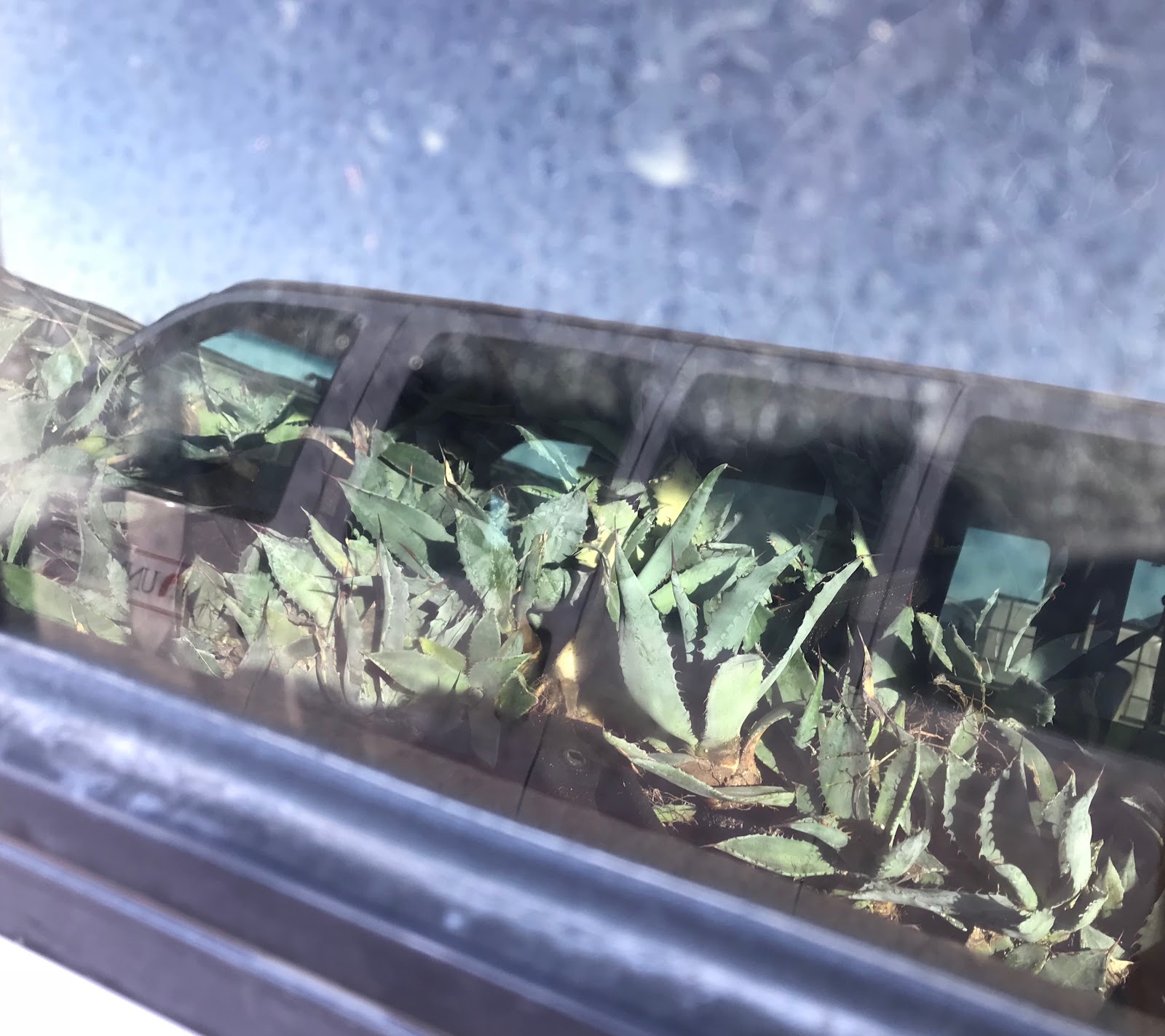
Meeting baby agaves for the first time, learning about how they are suffering population losses due to climate change, use in tequila and bacanora industries, and general disregard. Visiting a clonal agave patch that has grown in the same place for centuries and was likely established and cultivated by ancestral indigenous people to whom this land was a corridor of life. Planting baby agaves in what we hope will be a brand new patch, a small but deeply moving gesture of hope and solidarity with generations before and after us.

October 22, 2018

Former Bears Ears

Former Bears Ears


This place wasn’t built for humans. When we arrived on this cliffside, I felt like an invasive species – trammeling the soft ground, breaking branches, sneaking into a domain that isn’t mine. We’re in the former Bears Ears National Monument area at the edge of a massive, beautiful mesa with many reaching peninsulas, one of which is named Muley Point. No name seems significant enough for the incomprehensible vista below us. It feels like a place of the gods.

Great waves of slickrock rise and fall at the top of this enormous landmass. The rocks hold deep pools of water after a rain, pools weathered by generations of moving water and wind. The stony waves grow more frequent as they reach the edge of the bluff, then abruptly stop and change angle into an enormous red rockfall. This cliff plummets down to the red plain below, and then angles into yet more cliffs traveling downward, wiggling around each other as they go – the “goosenecks” of the San Juan River. The river itself is rarely, barely visible, a silty red waterway only seen in occasional glimpses from our perch far above.

This is a land for rocks and sands, for pinons and junipers. This is a land for plants, herbs, and medicines of the body and soul. This is a land of sky, endless sky, vistas so large that I really can’t even stand to look out at them sometimes because my mind can’t comprehend the vastness.

Oceans of rock; tablets of sky.

It is inhuman. It is inhuman in a magnificent, spectacular way. This place was not built for us to take from, to break, divide, or conquer. This is a place for learning, awe, humility, and gratitude.

What has helped me understand this place best are moments spent watching the birds. Ravens, pinon jays, turkey vultures, and even one grand golden eagle. The ravens are my personal favorite, because they seem so comfortable at this intersection of vertical land and lifting wind. They play together around all the cliffs edges, stitching together the many layers of air and land with their swirling, burbling flights.

I am thankful to the ravens for sharing this place with me, for giving me a way to access and understand a landscape which is not designed to make me comfortable. I am thankful that inhuman, more than human, nearly unintelligible landscapes exist. Where else could we learn about distance, about the swell and shift of rocks over time, about the tiny cryptobiotic life that builds over decades? Who else could teach us about these things if this landscape was gone?

#SaveBearsEars

October 13, 2018

Angel Peak

Angel Peak

This week, I met a great many things for the first time.

I met the drilling pads. A flat concrete pad, large metal cylinders to hold the winnings, stovetop pipes sticking out of the ground fanning nearly invisible waves of methane into the air, one or more compressor fans droning day and night. The well itself is a small tangle of pipes, mostly massed invisibly underground with long horizontal legs driven into the broken rock, reaching out to siphon strange blood out of stone. Once you know how to see them, they are everywhere.

Tucked mostly away from the highway, along the side roads you will start to see drill pads behind every hill, around the bend of every mesa, just behind those junipers, just over that rise, right next to that grandma’s house, near the church, next to the cornfield, and alongside the sheep pasture. Everywhere. If you get out of your car, you’ll hear them before you see them.

Or, more likely, you’ll start to feel them. A headache will creep up on you from seemingly nowhere. You will start to feel nauseous, like you can’t get a breath of fresh air, but not be able to figure exactly what’s wrong. That’s what happened to me in just one day spent around the wells. Imagine the situation for those who live every day right next door.

I met a toxic tangle of historical racism, violence, and injustice still playing out today, the ground for dirty industry made fertile by a continuing legacy of fear.

I met guides, protectors, teachers, and activists. People of this place by ancestry, tradition, and spirit, who love its juniper infused vistas, organize their lives around the patterns of the stars seen from within its wide sky, and want good, healthy lives for their elders and children.

Several days in to learning about and meeting these realities, feeling firsthand the keen and vibrant life of the Greater Chaco region along with a fraction of the pain it must be to experience your home being destroyed around you every day, I also met a tarantula.

I had been running down a dirt road, away from other people. Not running particularly well, especially given my bare feet and the coffee cup from camp breakfast that morning that I was still clutching in my hand. I don’t have much practice with bare-foot-coffee-cup-running on sand – I’m sure I looked like a bizarre white scarecrow being chased by invisible phantoms out into the field. That is to say, like a goofball. But I had to run because I was so dang angry that otherwise I would punch something.

Everyone around me at that moment was much too nice to punch, and anyway we had been talking all that week about the importance of peaceful activism. So, I wound up running like a scarecrow just to get out some of that rage. Being an utter failure at sand running, I eventually slowed down and stopped, sat down on the road, and tried to put things in perspective. Why I was there in that place, the responsibility that I felt to try to contribute something positive to the efforts of the protectors – to amplify but not gentrify their work – and what I could do about it. As I sat in the sand, I could see two drilling platforms to my North and Southwest. I could hear another just beyond the rise. I tried to tune them out and focus on the warm sand in the cool morning air, the resilience and beneficence of the plants still thriving in a trammeled land. I calmed down.

I stood up to walk back toward camp, and that’s when I met her. A big, fuzzy tarantula beauty, marching one leg after the other after the other (march march march; march march march; three on each side, all in rhythm!) down the road. We were heading in the same direction, so I joined in. March march march, march march, march march march. I tried to match my two-legged stride to the spider’s six.
Calm, quiet resolve emanated from this determined creature. I don’t know where the tarantula was headed, or really where I’m headed either, but for a while we just walked along the road together. And I thought: this is exactly what we need – this calm determination, this peaceful but implacable movement forward. One step in front of the other, one zine, one letter to a congress person, one protest, one friendship made, one alliance made, step by step by step, by step, by step. Continued, caring, focused, unflappable motion.

Eventually the tarantula turned away, their direction lying more to the North than the road cared to travel. I waved goodbye and said thank you for the lesson, a lesson I will keep trying to hold in my heart and acting out, step by step. A lesson that the protectors of Greater Chaco have already learned and are generously teaching others who also believe in the importance of a living land and sustainable society – step by step, always focused on creating better lives for all.


#FrackOffGreaterChaco
October 2, 2018

The shadow line - Wild Rivers, NM


The shadow line - Wild Rivers, NM

It was sunset when I started to climb the cliff to head back to camp. Or was it? The bottom of the valley was shaded in cool dark where the sun had disappeared behind the western cliff. But as soon as I began to climb I stepped across the shadow line and was back again in the striking late afternoon sun.

Time stopped. Or, time continued to progress in its own mysterious ways, but I could not perceive its motion. As I climbed breathlessly up the gorge side, the world turned at the very edge of my perception. The sun matched exactly the speed of my climb. It maintained a presence always at my side, never setting, never rising, never moving even while I labored forward. It sat always in the same angled, piercingly inquisitive position relative to myself.

Time stopped temporarily, for one creature on earth at one moment in our long history - my strange, soft human self crawling slowly up a cliffside in northern New Mexico. I continued to step forward, over rocks and more rocks, past sage and lichens, listening to the wind in the ponderosas and the ticking of sweat, breath, and blood in my ears. My body and the sun’s teeter-tottered reciprocally, balanced on the far rim of the canyon.

I continued upward, the shadow of sunset at my heels. I grew discouraged, out of breath. My mental state deteriorated as the cliff seemed to grow in front of my, as the constant sun angled sneakily beneath my hat brim but above the ridge of my sunglasses, shining rudely at me, egging me to either get on with it or quit. The earth had grown stationary, ceased its slow endless roll, and the zigzagging switchbacks of the trail appeared to be the only thing left in the world besides the sun, the cliff, and me.

A sudden burst of cliff swallows woke me from my trudging discord, and I realized that I was suddenly and improbably near the top of the cliff, with the sun still following faithfully along with me. I emerged at the top of the gorge onto the wide desert plateau and watched the sun resume its normal course. I imagined it was relieved to be finally untethered from my journey and free to rest for the day. The sun set, finally. Or, did it? The earth continued to turn and gracefully hid the sun from my view. I watched from the rim of the gorge, grateful for the light and the dark, grateful for life and the sensate world around me, and aware that the sun is always setting, and not setting, somewhere and with someone else.